Resolving Euthyphro’s Dilemma October 16, 2012

The Humean-Platonic tripartite (Ought-Is-Belief) theory of moral knowledge May 10, 2012

Answering Jerry Coyne and Jason Thibodeau on the Euthyphro Dilemma October 29, 2011

God (is) the Golden Rule (ought) without offending Hume April 10, 2011

Natural law, divine command and Euthyphro’s dilemma resolved March 27, 2011

Hume’s is-ought, Plato’s true-justified, Euthyphro’s dilemma and Gettier’s problem Feb 23, 2011

Norris, Gettier, Euthyphro, Hume and Plato: Is knowledge justified true belief? January 5, 2011

Good 101: Is there a solution to the Euthyphro dilemma? December 24, 2009

If there is an ad inserted into this post, I have nothing to do with it and do not benefit from it, except for having a WordPress site.

Posted on by Maryann Spikes | 1 Comment

From Potato Famine to Coffin Ship

This is the first chapter, From Potato Famine to Coffin Ship, of my mom’s book on Nellie Cashman, Toughnut Angel:  The Tale of a Real Life Adventuress of the Old West. Nellie came over here from Ireland on what they called coffin ships, the conditions of which were so wretched, a lot of people died during the voyage–many families held funerals for them before they left. Then she made and gave away fortunes as a miner in the Old West, always helping her predominantly male miners with food and lodging.  Those fortunes helped build hospitals.  She was truly an amazingly strong and great woman. This book will make you laugh and cry–the whole world should know Nellie. This first chapter was just published in Irish American Cultural Institute’s Newsletter Issue No. 912 (available via email) –h/t Jane Baker Continue reading

Posted in Reviews and Interviews | Leave a comment

The day I converted from atheism is approaching…

64450_287287424737812_1314788024_nI spruced up the old testimony for Brian Auten’s Former Atheist Project on Apologetics 315, just in time for my approaching born-again birthday.  If you’re a former atheist, Brian would love to hear your story–and so would I :)  Mine begins here…

Before I became an atheist, I had grown up in church, a preacher’s kid who prayed to receive Christ when I was four. I never matured beyond the Sunday school understanding of avoiding the punishment of hell and gaining the reward of heaven.  There were lots of questions my parents did their best to answer, but many questions lingered after I got married and moved away from home.

When we bought a computer, I used it to witness in chat rooms and message boards, even met a few times in person with one of the people to whom I was witnessing.  In the process I discovered people have a lot of doubts about Christianity, and I added those doubts to my own.

I remember the night when the scales tipped and my doubts outweighed my faith – I had a nightmare that I rode in the passenger seat of a car speeding through a hilly stretch of road and could not make the driver slow down. I woke up terrified as the car launched off a cliff into the blackness of night.  The grounding of my faith gave way to an abyss of nothing.  It didn’t kill me, but it didn’t make me stronger, either.  The abyss provides no ground for meaningful strength.

I lived as a lost, prodigal sheep for about five years.  Emotionally I abandoned my family, paying as little attention to them as I could get away with, and invested all my spare time in online philosophy message boards. I did a lot of selfish things I rationalized were okay at the time, as long as no one knew.  Now I regret those things.  They caused pain and left scars.  I learned that nothing genuinely good needs to be hidden.  Really, I knew that, but I ignored what I knew, and God gave me over to delusional thinking.  I remember with sadness even the happy memories during that time, because they are all colored with the full reality of what I hid.

By the time He brought me back to Himself, I no longer thought about God.  I didn’t think a God existed to think about.  I felt apathetic about life. I taught my kids that believing in God was like believing in the Easter Bunny, Santa Claus, and the Tooth Fairy. My still-believing husband and I butted heads over my stand.

The nagging question of why something exists instead of nothing needled me. It bothered me because I couldn’t answer it, not because I thought an answer exists.

Finally I tired of lying to my husband and stopped doing things I had to hide, hoping my marriage would improve.  I became a zombie.  I merely existed, and would’ve continued that way if God had not intervened. I wished I could believe like my husband believed, to make our marriage go more smoothly, but I couldn’t.  I couldn’t believe something for which I felt there was no evidence.

It all became real on September 22, 2005, when God smacked me upside the head. I am leaving out details no atheist would believe unless they experienced them, but He influenced me to tell my husband everything I had ever done.  It felt like I threw my whole marriage and our parenting up in the air and trusted God to catch it and help it all land safely on the ground.

It turned out my husband had broken down and prayed two days before that I would find God and our lives would get straightened out. He already knew I wasn’t completely present in our marriage, and when I told him the truth, he wanted to leave, but God put it on his heart to stay.

Besides guiding me to tell my husband the truth that day, God helped me quit smoking and let go of other addictions. Life wasn’t all sunshine and roses—things got much worse before they got better, but God was on our side and carried us through the storm of insanity. I refer to it sometimes as the fiery whirlwind. God broke me, sifted me and refined me.

He made His saving love real to me by offering me His hand and giving me the choice to be saved out of the mud when I still wallowed in it.  The transformation God brought about in my life helped me and my husband go from the nightmarish brink of divorce, to best friends in love all over again, united in our faith.  He helped me gradually restore the intimacy mothers are supposed to share with our children.

After Jesus made himself real to me, I decided I wanted to actually look into the evidence, rather than chant the mantra still heard from atheists today, that “there is no evidence”.  I’ve been involved in apologetics ever since.  Now I teach my sons about arguments for God’s existence and evidence of Jesus’ resurrection.

“For You had cast me into the deep… But You have brought up my life from the pit, O Lord my God.” –Jonah 2:3, 6

Posted in Tim McGrew | 12 Comments

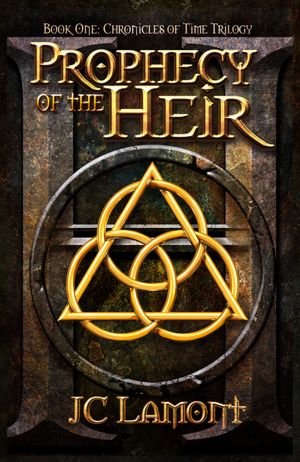
JC Lamont’s "Prophecy of the Heir" on the problem of judgment

Over the summer I read JC Lamont‘s Prophecy of the Heir, and not included in my review and author interview is mention that my absolute favorite thing about this book is how Lamont unapologetically, yet with the prowess of an apologist, answers the problem of the harshness of judgment. 

In the review, I do mention that Michael’s loyalty to the Prince is challenged mainly by his doubts surrounding why Elohim would bring judgment upon humans (the mud race), or at least not save them from the consequences of their choices.  The relationship between Michael and the Prince is forged in the crucible of this conflict.  Most of my favorite POTH quotes surround how Lamont handles this delicate issue.  So, below, I want to provide some background to those relevant favorites.


One cannot pardon those who do not wish to be pardoned.” –The Prince, p.45

It is after Lucifer has led the rebellion in Shamayim, and the Prince is explaining to Michael that all who followed Lucifer are no longer the same, but have become Shaityrim.  Michael is mourning the loss of his friends, including his best friend, and his mentor.  He asks the Prince, “Is there no chance of pardon?”

I will pardon any who wish to be pardoned.” –The King, p.83
Michael has asked the Prince, “If you care for them, …why do you not intervene?”  The Prince warns him “an intervention would be devastating,” and Michael replies that “the condition of Mortal-earth is devastating.”  Later, the Prince discusses the condition with the King, whose words are taken nearly straight from the Bible.  When the Prince hears these words, his grip tightens on his Father’s hand, and the King responds with, “I will pardon any who wish to be pardoned.”  The Prince whispers, “I know.”

Has he not offered them both pardon and life?  It is they who have rejected him, not he who has rejected them.” –Mauriel, p.85

The above circumstances send Michael storming in to confront the Prince.  Michael argues, “Annihilation is not what I meant by intervention.”  The Prince reminds him of his warning that intervention would be devastating, and Michael is ready to defect.  Michael withdraws to solitude for a century as Noach constructs the ship that will save his family and many animals. He is surveying Gaia one last time for any other souls that can be saved from the coming destruction, finding no one.  Mauriel engages him about the source of his despair.  “‘If Elohim does not intervene,’ she said, gazing at the Gaia, ‘how many more will be born and live in darkness, to the end of their days, only to die in their treason?'”  In the middle of their back-and-forth, she says the quote beginning this paragraph, and when Michael responds, “And soon they will be dead,” she replies, “‘Ay, a breath sooner than anticipated.  But Michael…They are already dead.'”

If I destroy all who commit treason, I am a dictator.  If I prevent them from committing treason, I am a manipulator who withholds from them the right to choose.  And if I do nothing, in the hopes that they turn from treason and seek truth, I am accused of allowing suffering and not being of love.  So pray tell…what course of action could I take that would please you?” –The Prince, p.324

Shaitan has incited Daeved to authorize the census rather than trust King Elyon.  The Destroyer is carrying out the resulting plague and Michael has orders not to protect them.  Gavriel tries to reason with Michael about why King Elyon would do this, but Michael’s despair turns to rage, and he flies on his pegasus back to Shamayim to confront the Prince, demanding to know why the Prince does not stop Shaitan’s influence.  The quote provided is the Prince’s reply.

My favorite moment in the whole story happens next.  I will quote it in its entirety:

Michael averted his eyes, and the Prince strode back to the pergola. 

Though Michael’s rage subsided, one thought remained.  Is this all just a game? 

The Prince snatched up his parchment and threw it at him. “Ay, Michael,” he said.  “It’s naught but a game!” 

Michael caught the scroll in surprise.  He hesitated, then unraveled it and read.  

***

Elyon, Elyon, my king, my lord   

Deliver me from this sword 

***

Why have you forsaken me 

In your eyes, forsaken me 

In your thoughts, in your heart, 

In your wrath, forsaken me  

***

In their hatred, dark and fierce, 

They mock, scorn and abase 

My hands and feet, they pierce 

My bones, they wrench from place   

***

You lay me in the dust 

Desert me as death calls 

Yet in you, will I trust 

Into your hands, my spirit falls  

***

He strode back across the garden, but when he reached the vines, the Prince called out to him. 

“Do not let your love for mortals kill you–that is not your path.”

Posted in JC Lamont's Prophecy of the Heir, Problem of Evil & Hell | Leave a comment

JC Lamont interview and Prophecy of the Heir review

I recently had the pleasure of reading and reviewing JC Lamont’s debut work of literary apologetics, Prophecy of the Heir, as well as interviewing its author, JC Lamont:

Book review: JC Lamont’s Prophecy of the Heir August 27, 2012
Shorter reviews on Amazon.com and BarnesandNoble.com.

Prophecy of the Heir author interview: JC Lamont August 27, 2012

In our interview, she fields all the many questions that popped into my head as I read her LOTR-inspired book of the new “angels and demons” genre.  I laughed, I cried–and even at one point got sick to my stomach.  More important, this book make me think.

JC Lamont’s “Prophecy of the Heir” on the problem of judgment

Posted in Apologetics, Reviews and Interviews | Leave a comment

Groothuis’ "Christian Apologetics" ch.12: The Design Argument

Resuming our discussion of Groothuis’ Christian Apologetics:


“[Dembski’s] method of detecting intelligent causes is already accepted in several areas of science, namely, archaeology, forensic science, intellectual property law, insurance claims investigation, cryptography, random number generation and the search for extra terrestrial intelligence (SETI).  Intelligent design (ID) simply employs these methods of detecting or falsifying design and applies them to the natural sciences as well.” p. 244

Dembski’s design filter: contingency, complexity, specificity:

1.  contingency: not explicable on the basis of natural law (automatic processes-though they can act upon it)

2.  complexity: less probably that it came about by chance

3. specificity:  the first two being the bull’s-eye…are specified before, not after, the arrow is shot.


“…the design inference is not based on ignorance of the natural world but on knowledge about it, especially given recent discoveries in physics (fine-tuning) and biology (the nature of the cell and DNA).  Those who reject all design explanations in principle have committed the logical fallacy of begging the question in favor of naturalism; if so, their naturalistic theories become unfalsifiable and impervious to counter-evidence–traits that are hardly theoretical virtues in the philosophy of science.” p. 247

“Even if we were to write a ‘0’ on each separate proton and on each separate neutron in the entire universe–and we could throw in all the other particles as well for good measure–we would fall short of writing down the figure needed.  [This is] the precision needed to set the universe on its course.” p. 250

Sir Martin Rees’ “six numbers“–via Lemley, quoted from page 251:

1.  The strength of the force that binds atomic nuclei together and determines how all atoms on earth are made.

2.  The strength of the forces that hold atoms together divided by the force of gravity between them.

3.  The density of material in the universe–including galaxies, diffuse gas and dark matter.

4.  The strength of a previously unsuspected force, a kind of cosmic anti-gravity, that controls expansion of the universe.

5.  The amplitude of complex irregularities or ripples in the expanding universe that seed the growth of such structures as planets and galaxies.

6.  The three spatial dimensions in our universe–“Life could not exist if it were two or four,” contends Rees.

“If each of the six numbers Rees has identified were dependent on the others–in the same sense that, say, the number of arms and fingers in a family depends on the number of family members–the fact that they allow for the existence of life would seem less of a shock.  ‘At the moment, however, says Rees, ‘we cannot predict any of them from the value of the others.’  So unless theoreticians discover some unifying theory, each number compounds the unlikeliness of each of the other numbers.'” p. 251 (but see more-fundamental-law objection below)

Regarding the expansion rate of the universe:  “…the likelihood of this constant occurring by chance is that of randomly hurling a dart from outer space and hitting a bull’s-eye on earth that is less than the size of one atom.” p. 253

Fine-tuning data is the result of either 1) design, 2) chance, 3) natural law/necessity, or 4) combo of 2 and 3.  Question:  Why not some combo of 1, 2, and/or 3?

Regarding the Weak Anthropic Principle (or “the truism objection”)–I will phrase it this way:  Sure, there is fine-tuning, but no God is needed to explain it, because if the natural laws necessary for our existence had not manifested, we would not be here to observe anything.  We are, so they did.  No God needed.

The problem with that, is it does not explain the fine-tuning or provide an explanation for the overwhelming improbability of the appearance of necessary conditions.

Inscrutable odds objection:  can only calculate probabilities for things in the world, not the world as a whole.  Wrong, because 1) there are far more possible human-life-prohibiting universes than possible human-life-friendly universes, 2) the uniqueness of our universe doesn’t rule out the consideration of probabilities, 3) we rationally consider probabilities for singular events in other situations.

Not chance, so mulitiverse:  The thing I am impressed with in this chapter is that most honest scientists don’t deny fine-tuning or try to argue it just happened by chance–hence, the multiverse theory (which is not merely a theory meant to deal with the improbability of fine-tuning, but is a theory some invoke for that purpose–because the more chances/universes you have, the greater your odds).   But… “…in order to ‘abolish one unobservable God,’ various multiverse theories require ‘an infinite number of unobservable substitutes.'” p. 261 –see earlier chapter on the problem of an actual infinite.  Multiverse theory 1) appears to be flagrantly ad hoc, 2) lacks experimental evidence, 3) is exceedingly complex.

The more-fundamental-law objection says such a law would explain everything and a Designer would not be required. However, such a “superlaw” could have been otherwise, is not logically necessary, would itself be highly improbable and specified for life to exist, and so would not explain away the design hypothesis.

Pantheism fails to explain design, because 1) the knower is not the known, 2) the universe is not a necessary being, 3) designing is done by a person, and 4) no rational argument can explain the presumably ineffable.

In sum:  The universe is not logically necessary and requires an explanation of its origins.  Further, the “six numbers” are either the result of 1) chance, 2) necessity, 3) combo of first two, or 4) design.  The probability of the first three is way, way, way, way, waaaaaaaaaaaay, way too low.  Therefore, 4.  Therefore, there is a Designer.

Questions for Dr. Groothuis, sent via email:

1.  Is that bone field on 261 a reference to the Higgs field?  Is the recent Higgs Boson discovery a step towards a unified theory for the “six numbers”?  Will it result in a rewrite of this chapter?

2.  On page 251 you say a unifying theory would make the life-friendliness of the “six numbers” less of a shock.  But of the more-fundamental-law objection, you say, on 263, the superlaw would still be improbable and specified for life.  Are you talking about two different things?

For those curious about the Higgs discovery, here is a great article from John Lennox in the Christian Post:  http://global.christianpost.com/news/the-god-particle-not-the-god-of-the-gaps-but-the-whole-show-80307


Update 8/28:  Had apologetics meeting last night, and have 2 more questions:

3.  Isn’t the arrow already shot, so that the fine-tuning is drawing the bull’s eye after the fact?  I know that must be wrong, because scientists don’t deny fine-tuning, but…?

4.  Is this argument saying the same thing as the anthropic principle (which uses the language “necessary” instead of “impossible”)–If it were naturally impossible that we be here, we wouldn’t be.  We’re here, therefore it is naturally possible.  Therefore, no supernatural explanation is needed.

Will email the new two questions to Dr. Groothuis, but I’m pretty sure he’s too busy to give a complete answer.  So–anyone reading this, who knows their stuff–please reply.

(discussion index)

Posted in Apologetics, Groothuis' 'Christian Apologetics', Reviews and Interviews | Leave a comment

Facebooked food pics, with recipes

Christmas Cookie Decorating

Ingredients:
Sugar cookies in Christmas shapes
Cream cheese cake frosting
Food coloring
Candy sprinkles

Directions:
1.  Put cake frosting in as many bowls as you have colors.
2.  Color the cake frosting with food coloring until you’ve got the desired color.
3.  Decorate the cookies with the colored cake frosting and sprinkles.
4.  Take goofy pics of your kids eating the silly creations and post on Facebook. Continue reading

Posted in Memories, Recipes | Leave a comment

Crucible

buried deep in thought
the crucible of reason
forges swords of truth

(btw…my recent Haikus are not completely only mine, as my first lines are the last lines of Haikus that preceded mine in the Creative Writing forum at ilovephilosophy.com)
Posted in Poetry, Poetry and Fiction | Leave a comment

Does "judgment" contradict the Gospel? The Point.

justice-love-scalesThis past week I’ve been doing a study of the Gospels, highlighting every time Jesus talks about the reason he became flesh.

One thing that has become obvious is that the Good News is synonymous with the kingdom of God/heaven and everything he says about it.

James wasn’t joking when he said faith without works is dead. In John, Jesus said the work required of us is that we believe the Gospel.

This is definitely no Stepford Gospel. But the number one error Jesus confronts is hypocrisy (especially in the form of religiosity)–but note that it is the hypocrisy of being harder on others than you are on yourself. The thing he commands the greatest is mercy (love)–the character of God.

Mercy doesn’t mean calling sin ‘good’–it means loving despite sin. Those who lack mercy the greatest are the ones who receive the harshest judgment–so mercy requires judgment of those who are not merciful, and proper judgment requires mercy. Ironic?

Those who don’t “get it” will be baptized with fire, and he refers to his crucifixion as a sort of baptism–so judgment, though harsh, is actually for our benefit, and so it is an act of mercy. I can vouch for that (for what it’s worth), because it is how he brought me back to himself.

There is a harshness of mercy-fueled judgment that communicates love and will “raise them up on the last day”. Then there is a hypocritical judgment not fueled by mercy at all–it will be thrown into the fire (out of mercy). That’s Good News. ♥

A version of this is cross-posted at CAA.

Posted in Problem of Evil & Hell, The Gospel | Leave a comment

Does Theism Foster Scepticism? | Reasonable Faith

Does Theism Foster Scepticism? | Reasonable Faith — These Q&A by Dr. William Lane Craig come right to my Inbox.  I found this one particularly interesting.  It mentions Plantinga’s argument against naturalism, Descarte’s evil demon (with a deceptive God version), as well as the “brain in a vat”.  The question, which is one that has been bothering me for a while, but is written by Brian, is short and to the point, and the answer is just long enough to do the job.  Enjoy :)

Posted in William Lane Craig | Leave a comment