Answering Stephen Law’s evil god argument

This is a reply to Stephen Law’s “evil god” argument he gave in his debate with William Lane Craig in October.  I first posted a version of it in a comment to my blog post here, in reply to Jason Thibodeau.

Stephen Law cooks up an evidential problem of good against an evil god (reverses the theistic answers to the evidential problem of evil) and then asks why the evidential problem of evil isn’t an equally good argument.  Actually, he asks, “if the evil god hypothesis can, solely on the basis of observational evidence, be ruled out as highly unlikely, why can’t we similarly rule out the good god hypothesis?”

Law considers the privation bit below to be “more of a Catholic thing” which is false—it is not restricted to Catholicism.  I’m not sure ‘why’ Dr. Craig ignores it, but his argument (which Law pretty much ignores) does allude to it:

1. If God does not exist, objective moral values do not exist.
2. Evil exists.
3. Therefore, objective moral values exist. (Some things are evil!)
4. Therefore, God exists.

But here’s the privation bit, which goes back to Augustine.

In order to sin or commit evil, there must first be a way things ‘should’ have gone—a way things are ‘supposed’ to be—a real ‘ought’—a preexistent good.  A falling short (sin), or privation (evil) [sin=evil], of the way things are supposed to be (the good), cannot exist unless there really is a way things are supposed to be.  See how similar this sounds to Dr. Craig’s argument?

1.  If God does not exist, “the way things are supposed to be” (a real ought/good) does not exist.
2.  Evil (privation of a real ought/good) exists.
3.  Therefore, “the way things are supposed to be” (a real ought/good) exists.
4.  Therefore, God exists.


So—first exists the way things are supposed to be, without which a falling short (sin), or privation (evil), is impossible (again, sin=evil).

That good—that ‘way’ things are supposed to be—if there IS one—is God.

God, because he is omnipotent, cannot fall short of himself, cannot be a privation of himself, cannot depart from the way things are supposed to be (himself).  [Such falling short, privation, departing–all of those things are weakness.]  Therefore, God can never be evil.  He has the choice—he will just never choose it, because that would be weakness, and he is omnipotent.  This argument goes back to Aquinas.

In short, evil cannot exist without a preexistent good, so whether one observes evil or good, neither can be used to argue for an evil god (because it cannot exist without a preexistent good which is more ultimate), whereas both can be used to argue for a good god (because the presence of good, as well as the presence of evil, requires the existence of a real ‘way things are supposed to be’—God).

This does not prove the existence of God, of course, but it does give us “very good grounds” (Law)—whereas the existence of an evil god is logically incoherent.

Posted in Divine Essentialism, Euthyphro Dilemma, Evil as Privation of Good, Golden Rule, Is-Ought Fallacy, Natural Law and Divine Command, Stephen Law's evil god argument, William Lane Craig | 7 Comments

Christian Carnival

Welcome to the November 9, 2011 edition of christian carnival ii.

I’d like to mention two pieces of news before you dig in to this feast.

1. Mark Deviny of Christian Apologetics Alliance has put together a new Christian apologetics search engine named C.A.S.E., appropriately. Currently searches 200+ apologetics sites and growing.

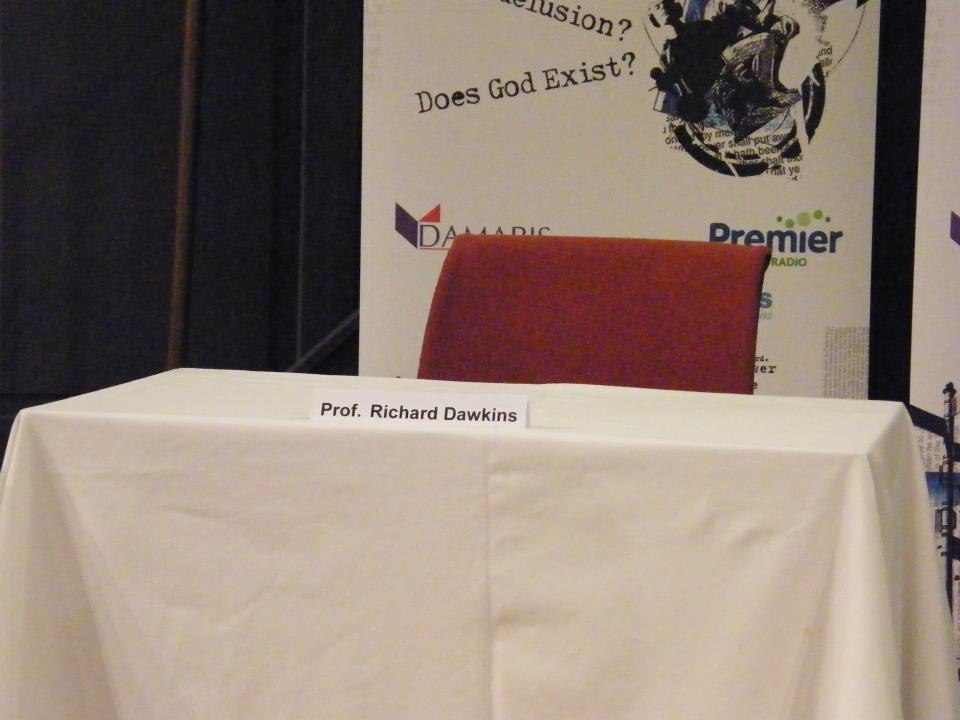
2. William Lane Craig’s half of his debate with the empty chair formerly known as Richard Dawkins (we love you anyway) is now viewable on YouTube.

Aoide-Melete-Mneme presents Thoughts on Mark posted at à la mode de les Muses, saying, “Touching upon the touchy topic of charitable giving.”

apologetics

Wintery Knight presents Can atheists know whether God has a reason for allowing pain and suffering? posted at Wintery Knight.

Mark McGee presents Can I Trust The Bible? (Part 5) posted at Faith and Self Defense, saying, “I teach self defense and faith defense. Both can be gentle and powerful – protecting the defender while redirecting the attacker to consider the truth. Our current apologetics study considers the trustworthiness of the Bible.”

Edgar Andrews presents Royal Institution lectures promote atheism posted at Who Made God?.

Dan Rodger presents Redeemed Mind Apologetics: Did Pontius Pilate really release prisoners at Passover or was this just made up by the authors of the Gospels? posted at Redeemed Mind Apologetics, saying, “A short article that provides some evidence for Pontius Pilate letting a prisoner free at Passover.”

Jamie Pellew presents Why Respond to Mormon Claims? posted at Answering Mormons.

Carson Weitnauer presents Is the Bible True? posted at Reasons for God, saying, “The audio and slides from a talk given at Boston University last week on the question, “Is the Bible True?” The talk challenges three common perceptions of the Bible: The Bible is full of myths, contradicts itself, and it has been translated so many times we have no idea what it originally said.”

Yours Truly presents Answering Jerry Coyne and Jason Thibodeau on the Euthyphro Dilemma posted at Ichthus77, saying, “Join the on-going discussion following this blog post from the end of October.”

J.W. Wartick presents Can we evaluate worldviews? How to navigate the sea of ideas posted at J.W. Wartick -“Always Have a Reason”, saying, “Surveys ways we can meaningfully evaluate competing worldviews.”

Stephen McAndrew presents Bankers Into Plowshares? posted at Songs of a Semi-Free Man, saying, “Humanity dreams of the day when swords are turned into plowshares. But our attempts to get to the promised land always fall short. This piece looks at the reason why.”

Glenn Peoples presents Brief thoughts about God’s freedom to command posted at Say Hello to my Little Friend.

devotionals

Josh presents 22 Great Max Lucado Quotes posted at What Christians Want To Know, saying, “Here are some inspirational quotes from Max Lucado.”

Cindy Jeffrey presents Prayer to be Drawn Closer to God posted at Christian Prayers Daily, saying, “What if we had the wisdom of Solomon and the love of Mother Theresa? “Prayer to be Drawn Closer to God” is an opportunity for us to seek God’s gifts of wisdom and of love.”

Gregory Calvin presents Should Christians reject sports entertainment, theater and movies? posted at Devotional Dave’s Daily Devotions.

Russ White presents Rage Against Reality (Again) posted at Thinking in Christ.

Ridge Burns presents What Is a Church? posted at Ridge’s Blog.

David R Wells presents Angry at God posted at Revelation 3:10 – Blog, saying, “Are you angry at God or are you angry for not getting your way? Are you using your circumstances as an excuse to lash out at God rather than draw closer to Him?”

Zowada presents You just have to follow your heart! posted at Zowada Blog, saying, “Is it always wise to follow your heart?”

Rebecca LuElla Miller presents Adam Loved His Wife Too Much posted at A Christian Worldview of Fiction, saying, “Adam had heard and understood and believed God’s clear command. But on one hand was God, and on the other was his wife, destined to die. Adam, instead of believing that God could display his mercy along with his justice, apparently chose God’s gift instead of God.”

Joe Plemon presents Are Christians Supposed to Help EVERYONE Who Has Needs? posted at Personal Finance By The Book, saying, “How do we know just whom to be helping and when to back away? This post gives some common sense suggestions.”

narratives

True Stillwater presents What Are You Grateful For? posted at Letters, Messages, and Prayers, saying, “Thoughts on gratefulness…”

Jennifer in OR presents To honor when it isn’t fair posted at Diary of 1, saying, “Oh, grace to cleanse my irritated soul. The way she shuffles, asks again what day it is, tells me she forgot how to whistle, burps at the table, a thousand ways that need grace.”

Suler Acosta presents “I Guess I Was Showing Love” posted at Mission Blog.

That concludes this edition. Submit your blog article to the next edition of christian carnival ii using our carnival submission form.

Past posts and future hosts can be found on our blog carnival index page.

Posted in Carnival, Richard Dawkins, William Lane Craig | 1 Comment

C.A.S.E. – Christian Apologetics Search Engine

Check out this new Christian apologetics search engine (C.A.S.E.) put together by Mark Deviny of Christian Apologetics Alliance.  Over 200 apologetics websites and growing.  Here are some questions you can ask in the search engine:

Isn’t there truth in every religion? 
Why do you believe Christianity exclusively?
How do you know God exists?
Can God make a rock so big he can’t lift it?
Wasn’t Jesus just a copycat myth?
Isn’t the Bible just a bunch of made-up stories?
If God is good and all-powerful, why is there so much evil in the world?
Why does God allow natural disasters to cause so much suffering?
Doesn’t evolution disprove the existence of a Creator?
Don’t you just have blind, unthinking faith?
Why did God order so many people to be slaughtered in the Old Testament?
Why do we need God for moral truth—aren’t lots of people good without God?
If Jesus sets us free, why is the church a bunch of hypocrites?
What about people who have never heard of Jesus—does God send them to hell?

Posted in Apologetics Toolbox | Leave a comment

Richard Dawkins: The Empty Chair

Pictured below is the Empty Chair that was reserved for Dawkins to follow the eighth commandment he quoted in The God Delusion:  “Never seek to censor or cut yourself off from dissent; always respect the right of others to disagree with you.”  Dawkins refused to show up to the Sheldonian Theatre October 25 to debate the world’s leading Christian apologist, William Lane Craig.

“The Ultimate 747 Gambit is a very serious argument against the existence of God and one to which I have yet to hear a theologian give a convincing answer, despite numerous opportunities and invitations to do so,” says Dawkins in the video below:

***

This post also appeared on Examiner.com.

Posted in Examiner.com Articles, Richard Dawkins, William Lane Craig | 4 Comments

Answering Jerry Coyne and Jason Thibodeau on the Euthyphro Dilemma

Maryann, Matt, Tom and Jerry (missing:  Jason)

I’m writing this blog post to get in on the most recent Euthyphro Dilemma dilemma between atheist biologist Jerry Coyne and my fellow Christian Apologetics bloggers Matt Flannagan of MandM and Tom Gilson of Thinking Christian [timely and relevant digression:  Coyne’s fellow atheist biologist Richard Dawkins continues to break an eighth commandment (quoted in The God Delusion) by refusing to test his 747 Gambit in debate with William Lane Craig…I’m still feeling some disappointment].

First, some back-story to get you caught-up…btw, (6) and (5) are out of order because Thibodeau posted before Coyne’s most recent reply:

*Jerry Coyne posted an (1) opinion titled “As atheists know, you can be good without God” on the USAToday Forum in July/August.

*Tom Gilson (2) replied to it on his blog Thinking Christian, August 4.

*Matt Flannagan (3) also replied on MandM, October 10 (excellent!).

*Coyne (4) replied to Gilson (Thinking Christian) on Coyne’s blog, October 20.

*Coyne’s (6) most recent reply (Oct 24) mentions both Flannagan (MandM) and Gilson (Thinking Christian) in order to share (5) Jason Thibodeau’s “The Euthyphro Dilemma is Robust” (Oct 21) (a reply to Flannagan on Thibodeau’s blog).

1.  Ontology vs. Epistemology.

First it is important to distinguish between two problems going on here.  It is one thing to ask “To what in reality does this theory correspond?” (ontology) and another thing to ask “What justifies believing this theory?” (epistemology).

The Euthyphro Dilemma (below) deals with ontology (how/whether ‘the good’ in general ‘corresponds’ to reality), whereas the Moral Monster Objection deals with epistemology (how we ‘justify’ believing a particular theory in Ethics).

So, it is possible to show the Euthyphro Dilemma to be a false one—to deal with an ontological question—without ever answering any questions dealing with epistemological objections like Moral Monster (or while answering them falsely).

Likewise, it is possible to agree with Jerry Coyne, as Christians do, that we can do/be good without believing in God (Paul reflects the same epistemology in Romans 2:14-15).  However, we are not always good and we do not always do good, so we are not the sort of being to which moral truth corresponds; we are not the sort of being described by moral truth.  When we do/are as we ought to do/be—regardless whether we believe God exists—our goodness, if true goodness, corresponds to a good being that is ‘always’ good (God), or it corresponds to nothing (is not real, has no ontology).  That is just another way of discussing William Lane Craig’s argument in Question 44, referred to by Gilson.  Dr. Craig, although he does subscribe to a version of Divine Command Theory not represented by Coyne, does NOT invoke the Divine Command Theory in Question 44, as Coyne falsely claims, Coyne saying it is “too stupid to address”.  Clearly he did not even read Question 44.

2.  The Euthyphro Dilemma and Arbitrariness

Simply put, the Euthyphro Dilemma (from Socrates’ dialogue with Euthyphro) asks whether the good is dependent on God’s commands (a made up, and so fictional, arbitrary good), or whether it is independent of God’s commands, because God’s commands depend on the good (so, no need for a God to ground it—it is higher than God’s commands—and so to what in reality does it correspond?).  This was resolved a long time ago by Aquinas, who explained that God commands in accordance with his good nature—he is that good being to which his commands correspond.  Critics then ask “But what dictates God’s nature?”—If not God, then God is not omnipotent.  If God, then the good is arbitrary.  The answer is that 1) God exists necessarily, as do all his attributes, so his nature, including goodness, is not dictated (he is the Uncaused Cause and his essence and existence are identicalhe exists his essence [or, as Sarte would say, is the “in-itself-for-itself,” (Being and Nothingness, Existentialism Basic Writings, Indianapolis/Cambridge: Charles Guignon and Derk Pereboom, Hackett Publishing Company, 2001, p. 358)]), though he is capable of choice, of creation and so forth, and, 2) Aquinas explains that “‘To be able to sin is to be able to fall short in action, which is repugnant to the omnipotence of God. Therefore it is that God cannot sin, because of His omnipotence.’[28]” (quoted by Steve Lovell).  Sin is only chosen out of weakness, and being omnipotent, being good, though he has the choice, God will never choose sin, and so in that sense is unable to sin.  On a related note, when Thibodeau writes that “it is possible for an all-loving God to command that we torture kids and thus, on the DCT, it is possible that torturing kids is right,” he is confused.  That it is possible (in one sense) for God to sin does not mean it is possible that sin is right.  And to enjoy watching innocent babies suffer (Thibodeau again) is sin (see my epistemology on the Golden Rule below).

One may be left wondering, “But why is God’s nature good?  Which theory in Ethics best describes God’s nature—egoism, utilitarianism, the categorical imperative, what?  And if we can explain that using good reasons, don’t we have an account of the good that is independent of God?”  First, whatever theory we come up with (epistemology), we must always ask “Is this true?  Does this describe something in reality?” (ontology).  Second, I think one reason the Arbitrariness objection persists is that no one (to my knowledge—correct me if I am wrong) ever attempts to actually answer “Which theory in Ethics best describes God’s nature?” (understandably to avoid losing ground when debating ontology by slipping into epistemology).  However, to that end:  This is my epistemology (the first half is on the Golden Rule, the second half refers to ontology).  This is my ontology (though Aquinas said it first, I only make reference to Hume, and I part ways with Dr. Craig on the is-ought distinction) (here is a brief discussion with Matt Flannagan on my position).  This longer post sums it up and refers back to other posts.  The first objection I hear is that the Golden Rule is found in every major religion and culture and so is not dependent on God.  Again—we agree we can be good without believing in God.  But if there is no God, no theory in Ethics can be true or correspond to anything in reality, not even the Golden Rule.  If you say it is true and corresponds when we do fulfill the Golden Rule, then you are saying it is only ever momentarily true—so what makes it the way we all ought to be, all of the time?  There must be a being ‘to’ which it is true all of the time in order for it to be true ‘for’ everyone. The Golden Rule is like the formula for photosynthesis – it describes something that actually happens – a perfectly good being. If you say it is true and corresponds when we do fulfill the Golden Rule, then you are saying it is only ever momentarily true—so what makes it the way we all ought to be, all of the time? There must be a being ‘to’ which it is true (descriptive) all of the time in order for it to be true ‘for’ everyone (prescriptive). But, description (fact) cannot take the place of prescription (ought), and prescription cannot take the place of description. And WANTING (value) to be the sort of being who is described by doing what they ought – cannot take the place of either the description (fact) or the prescription (ought). All three are needed independently of each other – all at once – for everyone (all selves/others) – at every time (all time).

If the Judeo-Christian concept of God is a Moral Monster and no good God exists, there is not a single theory in Ethics that corresponds to an always-good being in reality (there is no true theory).  If you think there is still the possibility of a good God existing that is not the Judeo-Christian God, just ask yourself:  What is the evidence?  Christians have evidence of God fulfilling the Golden Rule in taking on flesh and switching perspectives with us on the cross.  Crazy, sure—but no other religion has such a demonstration.  The New Atheists who claim there can be a “real” good without a correspondent good being—their epistemology hovers over an abysmal ontology.  Coyne and Thibodeau understandably leave out the nihilist alternative of the atheist existentialists (Nietzsche, Sartre, Camus, Heidegger, et cetera) that without a God to which a ‘real’ good may correspond, there is no good beyond what we choose/create/will (there is no moral truth).  They leave it out for the same reason they reject their (straw man) understanding and representation of Divine Command Theory.  Atheists and essentialist Christians all agree that if you (even God) have to make it up (command/dictate it into being), it isn’t ‘true’.  So either the atheist existentialists are right that there is no God, and so there is no good, or essentialist Christians are right that God commands in accordance with his good nature.

3.  Loose-ends…

So, the ontological questions in the Euthyphro Dilemma are resolved.  The epistemological questions are a completely separate issue.  I referred above to my epistemology (the Golden Rule) and I will defer to others who have addressed the Moral Monster objection elsewhere with different outcomes (William Lane Craig, Matt Flannagan, Paul Copan, et cetera).  I have only briefly (in my opinion) researched it.  I will only say here that to resort to the Moral Monster objection to avoid admitting your moral theory has no ontology is intellectually dishonest.

Lastly, a note on the ‘evolution’ spin.  I believe we evolved (note that I am about to read Jay Richards’ “God and Evolution” given to me by Wintery Knight), and that we evolved a moral sense just as we evolved the ability to reason in general.  If there is moral truth, it did not evolve into being—we merely evolved the ability, or hunger, to apprehend it (even if we still do not recognize the being that ultimately satisfies that hunger).  Any theory in Ethics that grounds its ontology in evolution is a sandcastle for the tides.  Matt Flannagan addressed that issue quite well in his article above (3).

***

This post also appeared on Examiner.com.

Posted in Divine Essentialism, Euthyphro Dilemma, Examiner.com Articles, Gettier Problem, Golden Rule, Is-Ought Fallacy, Justified True Belief, Natural Law and Divine Command, William Lane Craig | 28 Comments

ISWA-U free on-line apologetics curriculum for women coming October 28

The International Society for Women in Apologetics (ISWA) has put together a curriculum to get women all over the world equipped in knowing why we believe and how to answer objections to the Christian faith.  Free audio and video lectures by and for women will start becoming available October 28, with more to come in the future.  Each lecture comes with a workbook.  Go here to see some of the subject titles and an overview of what ISWA-U is all about. 

“Here are just a few:  Truth. The Deity of Christ. The Defense of the Resurrection. Women, Apologetics, and Evangelism. Finding God at Harvard. The Challenges of Equipping the Next Generation.”  (status update from ISWA’s Facebook page

In this interview, ISWA’s president, Sarah Ankenman, The Valley Girl Apologist, talks about why the upcoming ISWA-U apologetics curriculum is important for women:

Posted in Apologetics | Leave a comment

Confident Christianity Conference in the Dallas/Fort Worth area

There are 2 weeks left until the Confident Christianity Apologetics conference in the Dallas/Fort Worth area.  There are folks coming from as far as Oklahoma City and Houston.

Some of the amazing speakers include JP Moreland, Craig Hazen, Clay Jones and Michael Keas.  The whole conference is bilingual with Spanish-speaking apologists, as well!  There are two members of the International Society for Women in Apologetics speaking at this event: Melissa Cain Travis and MaryJo Sharp!

Conference agenda/registration link: http://www.cvent.com/events/confident-christianity-apologetics-conference/agenda-a593a5a1479c42898d6c445e8609c341.aspx
Video promos:
http://vimeo.com/30156409
http://vimeo.com/30155273
http://vimeo.com/30155771

Posted in Apologetics | Leave a comment

Picked Up Poetry (etc.)

Each poem posted in the order in which it was written, opposite the order in which it was picked up, oddly enough…

Ana Kata to the Infinite Well

Shall we indeed accept good from God and not accept adversity?” (Job 2:10)

God’s face shines upon you. God’s face shines upon you.
Feeling in three dimensions, still, you are, most times.
You ana kata from the fire against your will,
Waiting to be born posthumously no longer,
For those whom the Lord loves, He disciplines. You cry,
Smitten with the madness of too much seeing, “Lord!”
(Strong within your whirlwind of deluding spirits…)
“Lord!” Smitten with the madness of too much seeing,
You cry, for those whom the Lord loves, He disciplines.
No longer waiting to be born posthumously
Against your will: you ana kata from the fire.
Still… you are, most times, feeling in three dimensions.

God’s face shines upon you. God’s face shines upon you.
Wrested in obdurate stone, His seed is growing,
Watered from the infinite well. You remember
The rest of your life while living it. You awake:
“Is there anyone who dances through you?” He asks
(“Through to the division of soul and spirit… there,
Strong within your whirlwind of deluding spirits…
There, through to the division of soul and spirit.”)
He asks, “Is there anyone who dances through you?”
You awake: The rest of your life while living it,
You remember. Watered from the infinite well,
His seed is growing, wrested in obdurate stone.

Easter 2006

The Penwood Review and North Central Review published in their Spring 2011 issues.

Forward Poetry of Remus House will publish in the anthology A Symphony of Life: A Collection of Poetry, January 31, 2012.

Straightway Swept Away
To: my King

I came to You broken with fear and trembling
You stretched out Your hand and mastered my ascending
Plucked from the fire, chosen before the beginning
Resurrected by the finger of God, dancing
Done with spineless speculating, with pretending
Everything else in my life all foreshadowing
Found understanding in the shadow of Your wing
The mire Your incorruptible love transcending
In indelible ink, in Your own blood writing
To suffer death for friends, Son of God descending
The narrow path Your Word ever enlightening
Spongy mirror of my heart Your will reflecting
By You my soul walking, for Your return waiting

“Something so amazing, in a heart so dark and dim, when the walls fall down, and the light comes in” – Sara Groves, Something Changed

Poetry Rivals (of Forward Press) published in November 2010.

Haiku: Sword and Sacrifice

Sword and sacrifice:
made in the essence of God–
treat others as self.

There is no true good?
Good is a construct of will?
Ever take offense?

Love others as self:
no construct, no evolved good–
eternal essence.

Accept nothing less:
constructs do not obligate–
only love fulfills.

Goodness will always
withstand the fire of reason
and love, resonate.

Not even God willed
goodness into becoming
but IS that goodness.

The highest truth is
discovered, not created:
love your enemy.

Love is not love if
there is no demonstration–
Sword and Sacrifice.

Published in late 2009 in an anthology by Forward Press titled “My Word is My Voice”.

Published by Melanie Eyth on her blog, The Sheltered Poet.

North Central Review published in their Spring 2011 issue.

***

I’m Sorry
—Most recently published in Stepping Stones Magazine, and soon to be published in the 2014 winter edition of Poets’ Espresso Review.

***

Other than poetry:

At Coffee with the Euthyphro Dilemma (skit) published in September 2010 by Down in the Dirt.

Fun! :)

Posted in Euthyphro Dilemma, Poetry, Poetry and Fiction | Leave a comment

Richard Dawkins: Greatest no-show on earth?

Posted in Richard Dawkins, William Lane Craig | 1 Comment

San Francisco Atheists interested to see Dawkins debate Craig

When asked what they thought about the prospect of an October 25th debate in Oxford between Professor Richard Dawkins and Professor William Lane Craig, the San Francisco Atheists were of the same general opinion: they are interested.

An SF Atheists member, Owens Rodriguez, replied that “while I still think that debating Craig is mostly a waste of time based on what I’ve seen of his ‘arguments’ in the past, the more I think about it the more I think it’d be really interesting to watch.”

David Fitzgerald, the SF Atheists’ current representative, expressed that “Wm. Lane Craig is a bit notorious for being a more skilled debater than a skilled thinker.” David gave the example of Dr. Craig’s position on the slaughter of the Canaanites and continued, “Judging from Craig’s debates with opponents like Richard Carrier, Craig seems far more interested in scoring points and propping up the party line than really honestly engaging in intellectual discussion. So I can understand why many think it would be a waste of time to debate with someone like Craig. But for me, if Dawkins decided to participate, then no matter how many rhetorical games Craig plays, it would still be worth watching just for the chance to hear Richard Dawkins!” Dr. Craig’s debate with Richard Carrier can be seen on YouTube here.


SF Atheists’ former representative, David Millett, offered “My personal opinion is that Dr. Craig seems to be grandstanding. A debate for the purposes of showboating seems counterproductive to me. What is Dr. Craig trying to achieve with such a debate? Will he prove the existence of gods?” David went on to explain why proving God’s existence is not
possible, providing examples of evidence and why they are not credible. Dr. Craig claims the existence of God cannot be proved or demonstrated with mathematical certainty, but only shown to be more probable than not.


Neither Dr. Craig nor Dr. Dawkins are seeking the October 25 debate arranged by Premier Christian Radio, Damaris Trust and Universities and Colleges Christian Fellowship. In an interview with William Crawley of UK’s BBC Radio Ulster “Everyday Ethics” program, when asked “Does this bother you, that he [Dawkins] won’t debate you?” Dr. Craig replied, “Frankly, no. I think that the expectations on me, if such a debate came up, would be so high, that if he even just managed to survive, people would see this as a victory for him. So, I’m not plumping for this debate at all. This is not something that I’ve sought to do. This is something that other organizations and persons have tried to put together. I welcome it, but I’m not seeking it. I won’t be the least disappointed if this doesn’t come off.”

However—whereas Dr. Craig has accepted the invitation, Dr. Dawkins has refused four invitations sent to him from The British Humanist Association, The Cambridge Debating Union, the Oxford Christian Union and now Premier Radio. This refusal sparked accusations of cowardice in a letter from Oxford philosophy professor (and atheist) Dr. Daniel Came, urging Dr. Dawkins to reconsider debating. This in turn led to an embarrassing article in the UK Telegraph and this viral YouTube video.

Dr. Craig will show up to the October 25 debate in the Sheldonian Theatre in Oxford. If Dr. Dawkins does not, then Dr. Craig will give a critique of Dawkins’ The God Delusion. There will be a table and chair set up for Dr. Dawkins to the last minute.

Richard Dawkins’ events page shows that he is free in October.

Sign the petition for Dawkins and Craig to debate. It’s an old petition rejuvenated by the potential for an October 25th engagement.

Posted in Richard Dawkins, William Lane Craig | Leave a comment