
We finally got to check out the Virginia Corridor Trailway. Along the way we passed Roosevelt Park, so we stopped and played a little. Even ran into some old friends, the Sextons :)


This is the bridge over Briggsmore: Continue reading
We finally got to check out the Virginia Corridor Trailway. Along the way we passed Roosevelt Park, so we stopped and played a little. Even ran into some old friends, the Sextons :)
This is the bridge over Briggsmore: Continue reading
We’ve been really busy lately but wanted to plunk down some pics for this blog. We’ll try to keep this more updated.
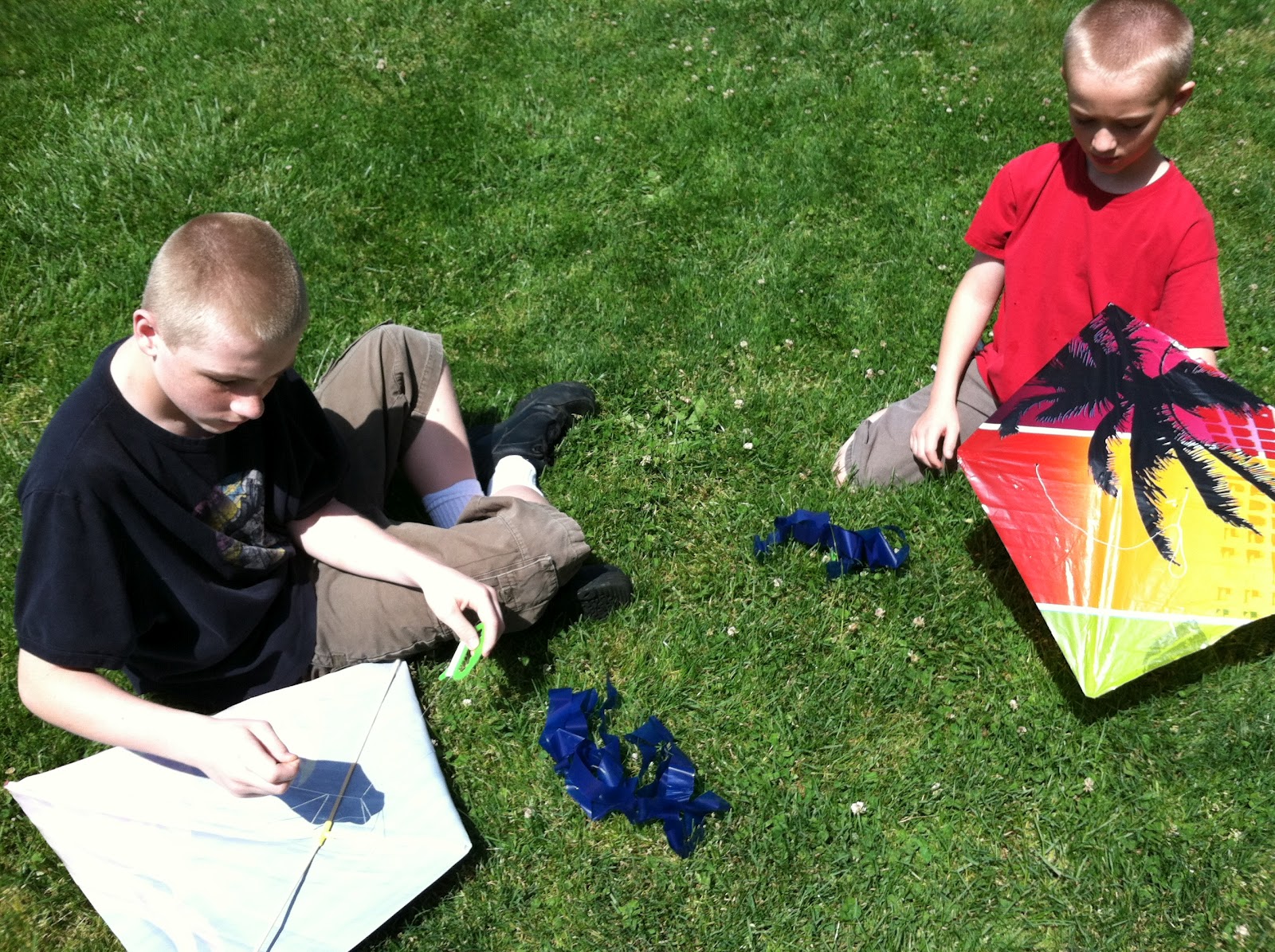
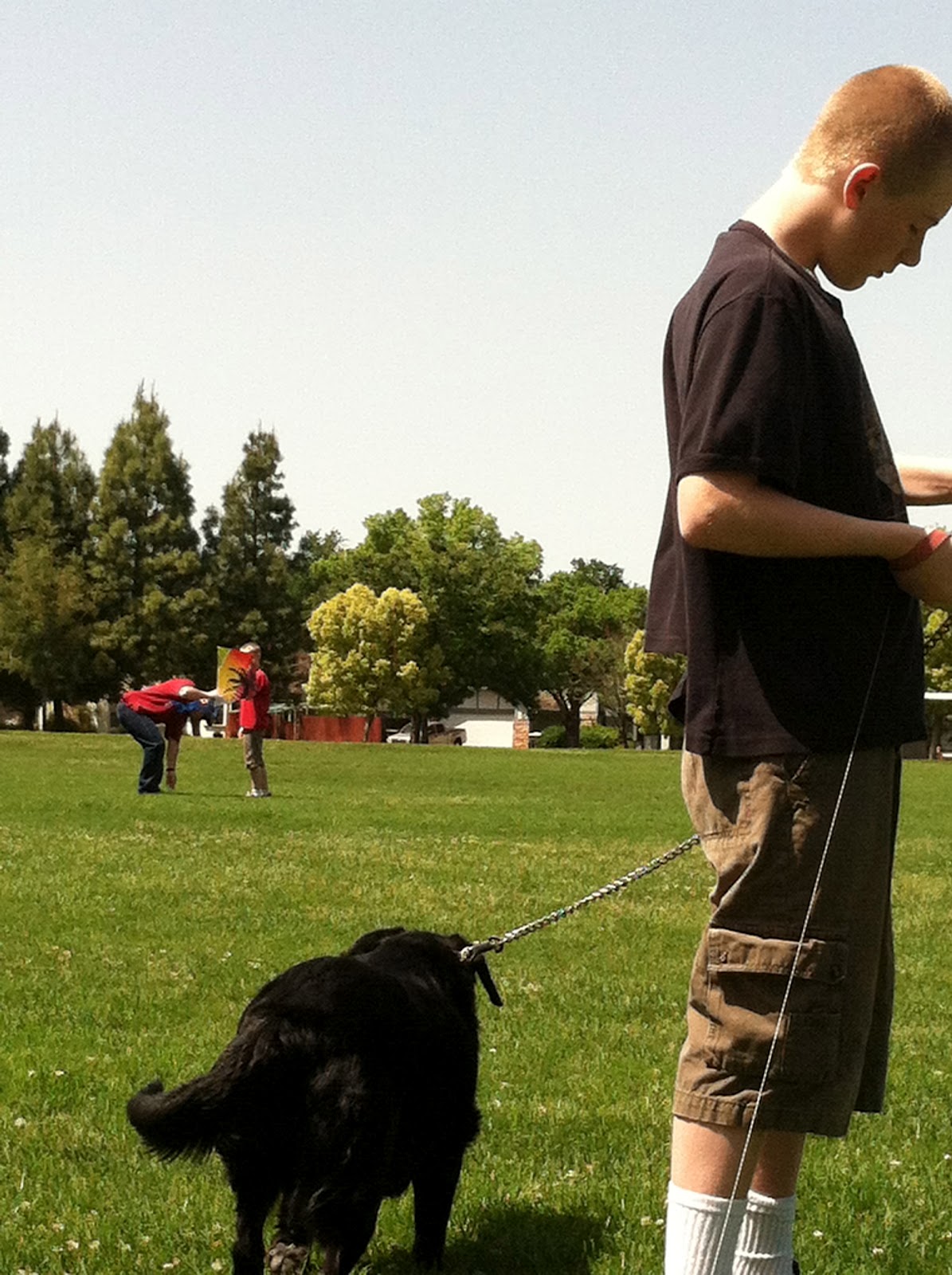
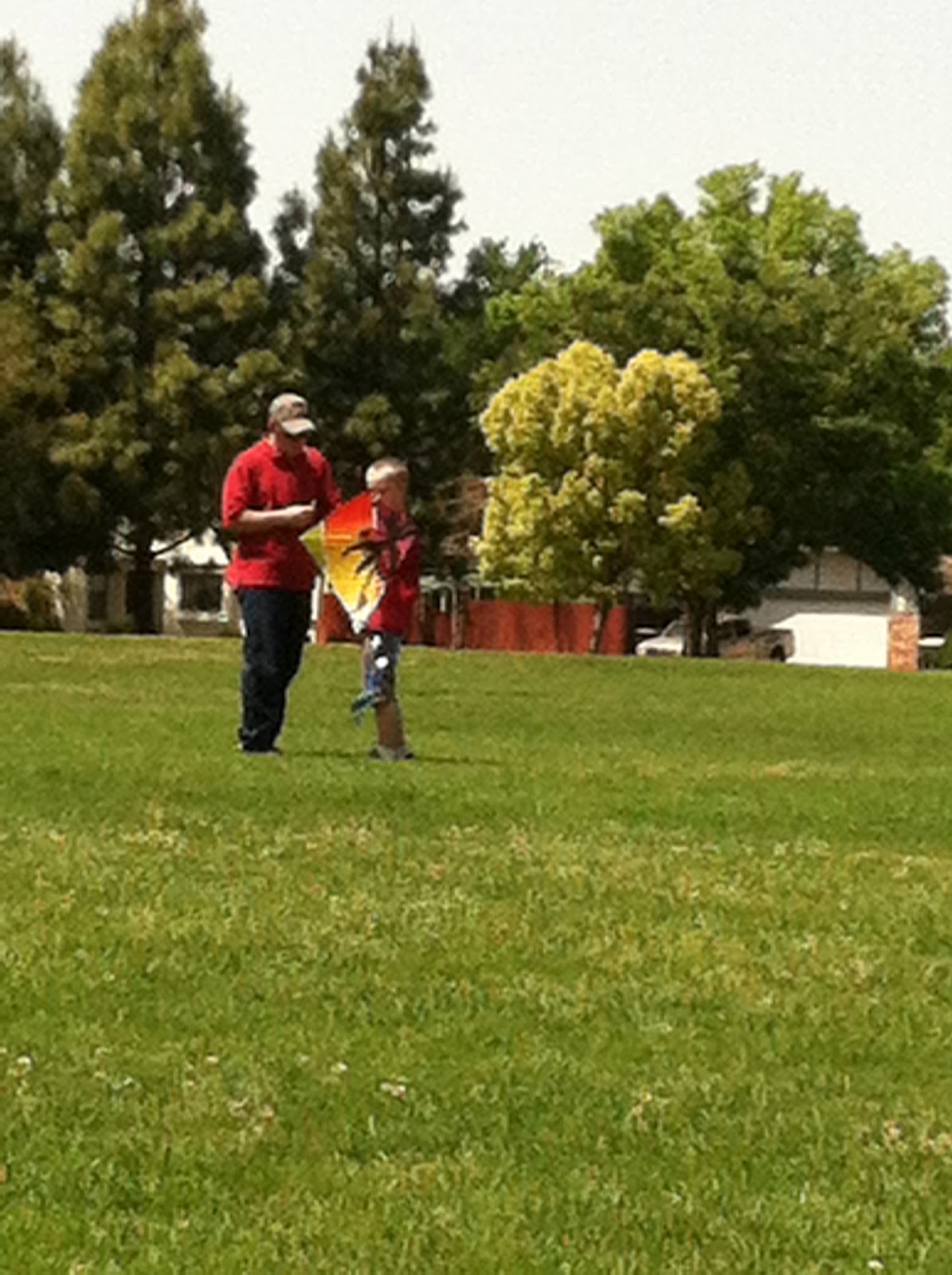
Flying Kites at Orchard Park: MiMa bought the boys some dollar store kites for Easter, so they tried them out at Orchard Park. Our black lab China tagged along :)

The first premise below is okay, because the idea of a perfect being is conceivable (not contradictory).
Anselm’s first ontological argument:
1. God is the greatest possible being.
2. Actual existence is better than possible (mental) existence.
3. Because 1 & 2, therefore God, as the greatest possible being, does not merely have possible (mental) existence, but also actual.
Question: What if the greatest actual being is not the greatest possible being?
The third premise below is okay because there is nothing contradictory about a maximally great being.
Anselm’s second ontological argument:
1. God is maximally great–a Perfect Being.
2. –that is either impossible or (if possible/actual) necessary (can’t be contingent).
3. It’s not impossible.
4. Therefore, it’s necessary.
5. Therefore, God exists.
Kant’s criticism that existence is not necessary to the idea of God (or that existence cannot function as a predicate for the subject of God) fails, because God is a possibly existing thing whose existence is a legitimate question (not all conclude he does exist).
Question: What if the greatest actual being is not a maximally great/perfect being?
Question: Is being “necessary” the same as being “logically necessary”? If so, then even if the ontological argument fails, it does not rule out God’s being logically necessary, as there are other arguments that can stand in for that (cosmological, moral, etc.).
Interlude: The paradox of the stone fails because it is logically impossible to make a stone he can’t lift–power is about logical possibles being actualized.
Plantinga’s ontological argument:
1. It is possible a maximally great being exists (it isn’t contradictory).
2. A maximally great being exists in some possible world.
3. So, a maximally great being exists in every possible world.
4. Therefore, a maximally great being exists in the actual world.
Question: What if it’s possible a maximally great being does NOT exist (in some, therefore any, possible world)…?
The “perfect island” parody/argument fails because there are no maximal or necessary islands.
Cool: These scriptures point to God’s necessity: Acts 17:24-25; John 5:26.
One thing I found helpful in this chapter of Groothuis’ Christian Apologetics was the distinction between general revelation and natural theology. Not all general revelation is ‘natural’–“God may have revealed himself in a way not susceptible to argumentation. If so, this general revelation would be more a matter of intuition than intellection,” (p. 174). I think the moral hunger common to every human fits in this category.
I appreciated that general revelation in the Bible was referenced. Romans 1:19-20: “What may be known about God is plain to them, because God has made it plain to them. For since the creation of the world, God’s invisible qualities–his eternal power and divine nature–have been clearly seen, being understood from what has been are, so that people are without excuse.” Romans 2:14-15: “(Indeed, when Gentiles, who do not have the law, do by nature things required by the law, <sup class="crossreference" style="font-weight: bold; line-height: normal; vertical-align: top;" value="(A)”>they are a law for themselves, even though they do not have the law. 15 They show that the requirements of the law are written on their hearts, their consciences also bearing witness, and their thoughts sometimes accusing them and at other times even defending them.)”
The “biblical authority” argument against natural theology fails because an authoritative text is not made less authoritative (is not undermined) by corroborating and confirming its authority (defending its credentials)–rather, these things establish the authority of a text, which is not dependent on such arguments, but is made more credible to (say) skeptics.
The “noetic effects of sin” argument against natural theology fails because “Reason itself cannot be fallen and remain reason,” and “Sound reasoning is the norm for [those] willing to follow truth wherever it leads.”
The “direct knowledge of God” argument against natural theology fails because there is more than one way to know something–theistic arguments can supplement immediate knowledge.
The “proofs lead to pride” argument against natural theology fails because theistic arguments can influence a person to begin to wonder about his or her status before God, to seem small in comparison to the metaphysical grandeur of God, and to investigate the claims and credentials of Christian theism.
The “natural theology in competition with special revelation” argument fails because “the Bible itself claims that God is revealed in nature and conscience” and “a sound apologetic method attempts to verify the Christian worldview through various means, not merely by natural theology.”
The “religious irrelevance” argument against natural theology fails because, rather than ending in deism, it is a “prelude to other evidences and arguments pertaining to” the creeds of Christianity.
The “complexity of proofs” argument fails because many reason these arguments on their own without ever first learning the arguments, and many master them–so it must not be too complex for them. The argument does not apply across the board and so does not eliminate natural theology altogether.
The “rational weakness” argument fails because it poisons the well rather than giving actual counter-arguments. “In the end, the proof of the theistic proofs lies in the proving, that is, in their validity and soundness, and not in theoretical musings about what they can or cannot or should and should not do. We must simply discover whether the arguments, singly and taken together, make belief in God more credible than otherwise.”
(discussion index)
 It rained that day.
If something life-changing is imminent, “It rained that day” inserts itself like a hypnotic suggestion into my mind, telling me I can weather this storm, too.
Things never stop changing, and it usually doesn’t rain. It’s another beautiful sunny California day, but I am dreaming of whirlwinds. Things will never be the same.
(to be continued)
 a straw becomes gold
an arrow in the whirlwind
who can escape it?
….
as in days of yore
the seed springs up eternal
drawn toward the heights
….
Birds of a feather
Flock. Iron sharpens iron.
Chip off the old block.
The apple did not
Fall very far from the tree
After my own heart.
When you were just small
You only ever knew good.
Return. Return now.
p. 158: “Pascal does not mention hell overtly in his famous argument.”
p. 161: “First, prudential matters do not determine beliefs; they merely prime the pump for investigation and consideration. One must consider the credibility of any religious claim in addition to its prudential promises.”
Question: “Yet this does not mean that we could not choose to cease believing in Christianity,” (p. 163)–how does that relate to ‘perseverance of the saints’? This use of the world belief implies not mere intellectual assent (the sort “even the demons” give), but actual faith.
p. 147-148: “most postmodernists are not skeptics but nonrealists. Knowledge for them is not difficult but easy: just assent to the language game in which we find ourselves–unless we deem it a totalizing metanarrative.”
p. 148: “Scripture repeatedly promises that confident knowledge of God is possible for humans rightly related to their Maker (see Romans 8:15-16).”
p. 149-150: “…some Christians supported slavery and female subjection as perpetual and God-ordained institutions when, in fact, they do not appear as such in Scripture itself. The postmodernist ‘hermeneutic of suspicion’ calls us to reevaluate such claims to see if they may be based more on the vested interests of the powerful than on truth itself. But this hermeneutic of suspicion itself must presuppose that the true can be separated from the false according to wise judgment. So, if we look back at the interpretation of Scripture held by the Southern slave owners and traders, we discern that their reading was adversely affected by their investment in the institution of slavery. That is, both their hermeneutic and their racist views were wrong, false and out of alignment with reality. The hermeneutic of suspicion cannot properly function without the concept of objective truth.”
p. 151: Dorothy Sayers: “In the world it calls itself Tolerance; but in hell it is called Despair. It is the accomplice of the other sins and their worst punishment. It is the sin which believes nothing, cares for nothing, seeks to know nothing, interferes with nothing, enjoys nothing, loves nothing, hates nothing, finds purpose in nothing, lives for nothing, and only remains alive because there is nothing it would die for.”
p. 152: “…cognitive apathy is strengthened in the contemporary world by several defining features of postmodernity. This apathy is not only justified in the name of tolerance, as indicated by Rauch, but also encouraged by the endless diversion supplied by a culture of entertainment.”
p. 153: Pascal: “If our condition were truly happy we should feel no need to divert ourselves from thinking about it.”

Welcome back to the Christian Carnival :) This edition of the carnival I would like to wish my groom of 15 years a very happy anniversary! God has truly blessed me with you, my soul mate and genuine friend who has been there even when times are hard. Everywhere you are is home to me, ever since you got stung rescuing my humble sandals from the bees. I love you, Lee :)
Now, then…you came for some blog posts, didn’t you?
We’ll start off with your submissions and follow up with the most recent May posts by Christian Apologetics Alliance bloggers.
Your submissions:
Red Button, Yellow Button by Chris Psallo at Charis: Subject to Change: “Profound insight from a young child on walking with Jesus.”
The Humean-Platonic tripartite (Ought-Is-Belief) theory of (moral) knowledge posted by myself at Ichthus77: “Our beliefs, moral or otherwise, in order to count as knowledge, must be ‘both’ justified (ought) by good reasons and true (is) to reality, satisfying both Plato and Hume.”
As a Man Thinketh in His Heart… by John Marcott at Walking Towards the Light: “Until thought it linked with purpose, there is no intelligent accomplishment. With the majority, the ship of thought is allowed to ‘drift’ upon the ocean of life…”
Windows of Wisdom – Proverbs 9:1-12 by Annette at Fish and Cans: “Learning more about what it means to be wise and how that impacts my life.”
Did God have a son? by Christian at Christian View: “This site describes some of the probelms in Biblical themes.”
almost there…24 days to go by Michelle at ‘adventures of a girl who loves Jesus’: “24 days till I head out with Mercy Ships!”
Act Like Men! by Barry Wallace at who am i?: “Act like men! (1 Cor. 16:13) — what does that mean?”
Unless the Lord Builds the House (Psalm 127) by Ridge Burns (submitted by Shannon Christman) at Ridge’s Blog: “Character that is beyond what we do comes when we are in tune with Christ, and the Lord builds the house not with brick and mortar, but with strong character and a spirit of cooperation, love, and dependence on Him.”
When to Leave Your Small Group by Sarah at That is What Sed Said: “Christian small groups can be a blessing. But if you’re not growing in your faith or the group is a discouragement, how do you go about leaving?”
Thankyou for your submissions!
And here are the most recent May posts from Christian Apologetics Alliance bloggers:





Christian Apologetics Search Engine



 Ichthus77