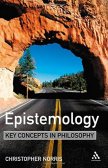
Groothuis’ "Christian Apologetics" ch.8: Faith, Risk and Rationality

Selected favorite quotes from Groothuis’ Christian Apologetics:

p. 158:  “Pascal does not mention hell overtly in his famous argument.”

p. 161:  “First, prudential matters do not determine beliefs; they merely prime the pump for investigation and consideration.  One must consider the credibility of any religious claim in addition to its prudential promises.”

Question:  “Yet this does not mean that we could not choose to cease believing in Christianity,” (p. 163)–how does that relate to ‘perseverance of the saints’?  This use of the world belief implies not mere intellectual assent (the sort “even the demons” give), but actual faith.

(discussion index)

Posted in Apologetics, Groothuis' 'Christian Apologetics', Reviews and Interviews | Leave a comment

Groothuis’ "Christian Apologetics" ch.7: Why Truth Matters Most

Selected favorite quotes from Groothuis’ Christian Apologetics:

p. 147-148:  “most postmodernists are not skeptics but nonrealists.  Knowledge for them is not difficult but easy: just assent to the language game in which we find ourselves–unless we deem it a totalizing metanarrative.”

p. 148:  “Scripture repeatedly promises that confident knowledge of God is possible for humans rightly related to their Maker (see Romans 8:15-16).”

p. 149-150:  “…some Christians supported slavery and female subjection as perpetual and God-ordained institutions when, in fact, they do not appear as such in Scripture itself.  The postmodernist ‘hermeneutic of suspicion’ calls us to reevaluate such claims to see if they may be based more on the vested interests of the powerful than on truth itself.  But this hermeneutic of suspicion itself must presuppose that the true can be separated from the false according to wise judgment.  So, if we look back at the interpretation of Scripture held by the Southern slave owners and traders, we discern that their reading was adversely affected by their investment in the institution of slavery.  That is, both their hermeneutic and their racist views were wrong, false and out of alignment with reality.  The hermeneutic of suspicion cannot properly function without the concept of objective truth.”

p. 151:  Dorothy Sayers:  “In the world it calls itself Tolerance; but in hell it is called Despair.  It is the accomplice of the other sins and their worst punishment.  It is the sin which believes nothing, cares for nothing, seeks to know nothing, interferes with nothing, enjoys nothing, loves nothing, hates nothing, finds purpose in nothing, lives for nothing, and only remains alive because there is nothing it would die for.”

p. 152:  “…cognitive apathy is strengthened in the contemporary world by several defining features of postmodernity.  This apathy is not only justified in the name of tolerance, as indicated by Rauch, but also encouraged by the endless diversion supplied by a culture of entertainment.”

p. 153:  Pascal:  “If our condition were truly happy we should feel no need to divert ourselves from thinking about it.”

(discussion index)

Posted in Apologetics, Groothuis' 'Christian Apologetics', Norris' Epistemology, Reviews and Interviews | Leave a comment

Christian Carnival May 16, 2012

Welcome back to the Christian Carnival :)  This edition of the carnival I would like to wish my groom of 15 years a very happy anniversary!  God has truly blessed me with you, my soul mate and genuine friend who has been there even when times are hard.  Everywhere you are is home to me, ever since you got stung rescuing my humble sandals from the bees.  I love you, Lee :)


Now, then…you came for some blog posts, didn’t you?


We’ll start off with your submissions and follow up with the most recent May posts by Christian Apologetics Alliance bloggers.


Your submissions:


Red Button, Yellow Button by Chris Psallo at Charis:  Subject to Change:  “Profound insight from a young child on walking with Jesus.”


The Humean-Platonic tripartite (Ought-Is-Belief) theory of (moral) knowledge posted by myself at Ichthus77: “Our beliefs, moral or otherwise, in order to count as knowledge, must be ‘both’ justified (ought) by good reasons and true (is) to reality, satisfying both Plato and Hume.”


As a Man Thinketh in His Heart… by John Marcott at Walking Towards the Light: “Until thought it linked with purpose, there is no intelligent accomplishment. With the majority, the ship of thought is allowed to ‘drift’ upon the ocean of life…”


Windows of Wisdom – Proverbs 9:1-12 by Annette at Fish and Cans: “Learning more about what it means to be wise and how that impacts my life.”


Did God have a son? by Christian at Christian View: “This site describes some of the probelms in Biblical themes.”


almost there…24 days to go by Michelle at ‘adventures of a girl who loves Jesus’: “24 days till I head out with Mercy Ships!”


Act Like Men! by Barry Wallace at who am i?: “Act like men! (1 Cor. 16:13) — what does that mean?”


Unless the Lord Builds the House (Psalm 127) by Ridge Burns (submitted by Shannon Christman) at Ridge’s Blog: “Character that is beyond what we do comes when we are in tune with Christ, and the Lord builds the house not with brick and mortar, but with strong character and a spirit of cooperation, love, and dependence on Him.”


When to Leave Your Small Group by Sarah at That is What Sed Said: “Christian small groups can be a blessing. But if you’re not growing in your faith or the group is a discouragement, how do you go about leaving?”


Thankyou for your submissions!


And here are the most recent May posts from Christian Apologetics Alliance bloggers:

Always Have a Reason – J.W. Wartick:
Apologetics 315 – Brian Auten
Apologetics Guy – Mikel Del Rosario:


Christian Apologetics and Intelligence Ministry – Michael Boling & Jim Latour:
Christian Apologetics UK – group blog:
Deeper Waters – Nick Peters:
Dove Theology – Calum Miller:
Faith and Self-Defense – Mark McGee:
Faithful Thinkers – Luke Nix:
Hard-Core Christianity – Melissa Travis:
Hieropraxis – Holly Ordway:
The Poached Egg – Greg West et al:
Possible Worlds – Randy Everist:
Proslogian – Dr. Jay L. Wile:
Ratio Christi @ OSU – Eric Chabot et al:
The Real Issue – Rob Lundberg:
Reasons for God – Carson Weitnauer:
Say Hello to My Little Friend – Glenn Andrew Peoples:
Sententias – Max Andrews:
Songs of a Semi-Free Man – Stephen McAndrew:
Thinking Christian – Tom Gilson:
TrueU – Mike Keas et al:
The Two Books Approach – Greg Reeves:
Posted in Carnival | Leave a comment

Calaveras for Mothers Day

Headed for the hills for Mothers Day and had a beautiful day at Calaveras Big Trees. :)  See slideshow.
Posted in Memories | Leave a comment

This slideshow requires JavaScript.

Rather than mope around all day sounding like a man from being sick for over a week, we up and headed for the hills to spend Mothers Day at Calaveras Big Trees.  The Dogwood Trees were in full bloom and it’s the best time we’ve had in quite a while.

Posted on by Maryann Spikes | Leave a comment

Memories with Mom

A Mother’s Day tribute to Mom:

My mom is an Elvis-loving Okie with mostly Irish roots, a public relations editor turned elementary school teacher.  She is putting the finishing touches on a biography of Nellie Cashman, a hero of a woman and a woman after my mom’s own heart.  Nellie came to America as a child on a hell ship during the Irish potato famine and struck it rich as a mining woman, dying penniless because all the money she made went to helping people.  My mom had her own struggles growing up and shares Nellie’s independent, no-nonsense spirit, appreciation of new places to explore, and eye for where help is genuinely needed.  She takes after my Grandpa John whenever she helps us kids, saying to help our kids the same way, like Grandpa John said when he would help her.

More About Mom

Posted in Memories | Leave a comment

The Humean-Platonic tripartite (Ought-Is-Belief) theory of (moral) knowledge

ImageOur beliefs, moral or otherwise, in order to be knowledge, must be ‘both’ justified (ought) by reasons ‘and’ true (is) to reality, satisfying both Plato and Hume.  Read my latest post all about that here.

Posted in Apologetics | Leave a comment

The Humean-Platonic tripartite (Ought-Is-Belief) theory of (moral) knowledge

The Humean-Platonic tripartite (Ought-Is-Belief) theory of (moral) knowledge
It is possible to blend Hume’s is-ought distinction (1) in Ethics with Plato’s justified-true-belief theory of knowledge. 

Simply put, whatever sort of beliefs one is talking about, including moral beliefs, they must be ‘both’ justified by reasons (a justified belief OUGHT to be believed) ‘and’ correspondent to reality (a true belief IS true). Just because one has good reasons for one’s belief does not mean it is true. And even if one believes something that is true, one may have horrible reasons for believing it (bit of a tangent: Gettier was wrong in assuming falsehoods count towards justification) [Gettier is answered elsewhere (2)]. We may refuse to follow the evidence because it supports a conclusion we don’t want to honestly acknowledge. All of this is true about any belief one holds, moral or otherwise. In order for one’s belief to be knowledge, it must satisfy those two conditions: 1: It must be backed by good reasons (justified/ought). 2: It must correspond to reality (true/is). These conditions are very different from each other. Both are required separately. So, satisfying both conditions is not Hume’s problem—it is when one condition takes the place of the other that one commits Hume’s is-ought fallacy, or its reverse (ought-is).

That said…

Hume obviously only drew this distinction when he was discussing moral knowledge, not any other kind of knowledge, and Plato grappled with Euthyphro’s (false) dilemma (it, skeptics, anti-realists and Gettier are all answered elsewhere (2)).

If one understands the blending and one is not a Christian, one may not be comfortable with it because one’s moral theory doesn’t correspond to, or describe, anything in reality, knowing of no always-good person who never has and never will violate one’s moral theory. That discomfort, though understandable, is not a valid reason to reject the is-ought distinction.

If one is a theist who still rejects Hume’s is-ought distinction because one thinks it means the Good cannot correspond to God, then one is misunderstanding what Hume really meant by his distinction, and there is still some work to do in communicating the blending properly. Even educated Christians like Dr. Richard Weikart and Dr. William Lane Craig share such a misunderstanding. Dr. Craig says:

(quotes omitted) …the theistic view is that these qualities are good because (Maryann: rather than exist as, or exist if) they are found in God’s nature. The alternative (that God is good because his nature matches the Good) is just Platonism all over again, which we’ve already rejected (see my three-pronged critique of Platonism).

(3)

and 

The theory that I have defended is a form of Divine Command Theory. According to this view our moral duties are constituted by the commands of an essentially just and loving God. It seems to me that this theory does derive an “ought” from an “is,” and justifiably so—though not in the way you imagine. The theory does, as you say, ground moral values in God’s unchanging nature. God is the paradigm of goodness. But that is not to say that “because God is a certain way we ought to behave in certain ways.” No, our moral obligations and prohibitions arise as a result of God’s commands to us. God’s nature serves to establish values—goodness and badness—while God’s commands establish moral duties—what we ought or ought not to do. Grounding moral values in God no more derives an “ought” from an “is” than does Plato’s grounding values in the form of the Good (indeed, one of my critiques of moral platonism is precisely its failure to provide any basis for moral duty). The theist and Plato just have a different ontological ultimate.

(4)

It is unclear here whether or not Dr. Craig thinks the is-ought fallacy is a real fallacy. He seems to when he dismisses the idea that “because God is a certain way we ought to behave in certain ways” (ibid). But he seems not to when he asserts “our moral obligations and prohibitions arise as a result of God’s commands to us” (ibid). It is a tangent, but he also unnecessarily distinguishes between moral obligations and moral values. Anyway, to say “because this is God’s command, we ought to behave according to it” commits the is-ought fallacy.

There has been some discourse with Dr. Craig on this matter via Facebook (5), and via email with Dr. Weikart. Dr. Weikart’s most recent reply just restates his misunderstanding: 

You are denying the is-ought distinction, because (Maryann: according to me, Maryann) moral goodness (ought) is integrally connected to God’s being (is).

(via email)

Grounded in, yes. Justified by, no.


Reference List

1. Ichthus77. (2011). Where I am at with Hume’s is-ought distinction. Retrieved from http://ichthus77.blogspot.com/2011/07/where-i-am-at-with-humes-is-ought.html

2. Ichthus77. (2011). Answering Gettier. Retrieved from http://ichthus77.blogspot.com/2011/01/answering-gettier.html

3. Reasonable Faith. (2012). Moral Argument for God. Retrieved from http://www.reasonablefaith.org/moral-argument-for-god#ixzz23vssuCM3

4. Reasonable Faith. (2012). Does Theistic Ethics Derive an “Ought” from an “Is”? Retrieved from http://www.reasonablefaith.org/does-theistic-ethics-derive-an-ought-from-an-is#ixzz23vtucp00

5. Ichthus77. (2012). Is-ought discussion with WLC. Retrieved from http://www.ichthus77.blogspot.com/2012/01/is-ought-discussion-with-wlc.html 

Posted in Euthyphro Dilemma, Gettier Problem, Is-Ought Fallacy, Justified True Belief, William Lane Craig | Leave a comment

Haimerick Maneuver

Shadow Puppet

There was an old soul
with an abysmal hole and
shadow puppet ends.

They were true for him
until he realized they lacked
real correspondence.

Rarely, if ever,
did he question whether he
hungered for nothing.

Posted in Poetry, Poetry and Fiction | Leave a comment

Groothuis’ "Christian Apologetics" ch.6: Truth Defined and Defended

The apologetics study group LOVES this quote from Groothuis’ Christian Apologetics:  “We may be entitled to our own opinions, but we are not entitled to our own facts.” p. 124  It’s actually a variant of a quote commonly attributed to Daniel Patrick Moynihan and a couple others, but that is not credited in the book.  Still–it is true.  I think it is fair to say it has achieved meme-status.

“‘Adultery is wrong’ is true because that statement corresponds to the objective, universal and absolute moral law revealed by God, which is in accordance with his eternally stable character and the character of his creation.” p. 126

That last quote hits on natural law, divine command, Euthyphro’s Dilemma, the is-ought fallacy, et cetera.  I am currently discussing that with some folks from ILP here, and have done some work on it previously if you scroll to the relevant section here (“Euthyphro, Hume, Plato, Gettier”).

(discussion index)

Posted in Apologetics, Divine Essentialism, Euthyphro Dilemma, Gettier Problem, Golden Rule, Groothuis' 'Christian Apologetics', Is-Ought Fallacy, Justified True Belief, Natural Law and Divine Command, Norris' Epistemology, Reviews and Interviews | 3 Comments