The reason for hope: One woman’s bravely told story of forgiveness

1373766470_9806_pic4(1)“Always be ready to give a reason for the hope that is in you.” 1 Peter 3:15

In today’s The Reason for Hope we hear from a woman whose story is evidence that God never leaves our side, even when we are not walking with Him.  She chose to remain anonymous out of concern for how the personal details of her story might affect how some people treat members of her family.  May her story speak to those who are imprisoned by guilt and unable to forgive, or to accept God’s forgiveness of themselves or others.  Her story, shared in part via e-mail, in part via phone, is a shining example that He never lets go.  We are His works in progress. Continue reading

Posted in Abortion, Examiner.com Articles, Testimonies | Leave a comment

Moral realism and our rights and liberties, part 2

1373747839_2097_bill-of-rights-m(1)Is there a real basis from which to extend rights to every individual?

Do we have evidence that there is moral truth, that our rights are real and not made up, that our indignation is not delusion?  In part 1 of this series, we saw that our rights and liberties are either completely made up (anti-realism) or they are discovered moral truth (moral realism).  Here in part 2 we will explore the evidence for their being discovered, for moral realism, the beginning of a basis from which to make the case for protecting the rights of every individual on the globe. Continue reading

Posted in Apologetics, Examiner.com Articles | Leave a comment

Moral realism and our rights and liberties, part 1

1373747839_2097_bill-of-rights-m(1)If civil rights and liberties matter to you, then moral realism matters to you.  If moral realism is not true, civil rights and liberties do not truly exist and social justice is a myth (as is the meaning of life and any real purpose you might have been hoping for).  If there are no real rights, then you have no real argument against anyone who infringes on your rights—they are infringing on nothing; your indignation is a delusion.  So let’s take some time to really examine this question:  Is moral truth discovered, is it created, or is there no discoverable moral truth?  In other words:  Do we discover our rights, do we create them, or are there no discoverable rights?  The last two say there are no “real” rights.  The first one is moral realism.  Continue reading

Posted in Apologetics, Divine Essentialism, Epistemology, Ethics & Metaethics, Euthyphro Dilemma, Examiner.com Articles, Moral Argument, Natural Law and Divine Command | Leave a comment

Apologetics: Because the unexamined life is not worth living

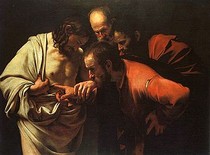
1373747115_2026_350px-Caravaggio_-_The_Incredulity_of_Saint_ThomasIf you have nagging or fascinating questions about the meaning of life (or what our purpose is), if there can be one true religion, if faith and reason conflict (is faith blind?), if creation and evolution conflict, if there is evidence of God (if there is only one, and why), if God is good, how a good God could allow suffering and evil (and hell), if there is moral truth and how to figure out what it is, if good and evil are opposites, what counts as evil, or sin, and how that is determined, if we even have free will to resist sin, if free will and predestination (or sovereignty) conflict, why Christians think salvation is important, if the Bible can be trusted, why the Christian church is responsible for so much evil, et cetera, then you have an interest in apologetics. The word apologetics comes from the Greek legal term, apologia, meaning defense. Whenever you are defending a position, including ridding it of errors and exposing the errors of opposing positions, you are engaging in apologetics. As Socrates famously said, “The unexamined life is not worth living.”  Apologetics is such an examination; an apologist is an examiner. Continue reading

Posted in Apologetics, Examiner.com Articles | Leave a comment

RFG sermon series ideas: The Solution

Tim Keller’s The Reason for God sermon series ideas.

The Solution
Luke 1:1-4; Luke 24:13-32
Key Thought: Jesus’ bodily resurrection happened historically and is culturally and personally relevant and challenging, a challenge we cannot simply dismiss.
Historical Context:
· Luke investigates this matter thoroughly. Love makes Himself evident on the road to Emmaus and in the breaking of the bread.
Sermon Points:
I. Doubt: We Can’t Trust the Biblical Account of the Resurrection Historically
–The resurrection narratives of the gospels developed later, long after the events themselves.

Answer:

1. “The content is far too counterproductive for the gospels to be legends,” (104). Keller is answering the claim that “the gospels were written by the leaders of the early church to promote their policies, consolidate their power, and build their movement,” (104). Keller asks, if that is so, why do they not have Jesus speaking on circumcision? Why invent the story of the crucifixion, which makes Jesus look like a criminal? Why invent Jesus’ Gethsemane experience, or crying out on the cross, which makes Jesus look like a weak failure? Why make (culturally incredible) women the first witnesses of His resurrection, rather than (culturally credible) men? Why paint the apostles as “petty and jealous, almost impossibly slow-witted, and in the end as cowards who either actively or passively failed their master?” (105). Why reveal the horrible failure of Peter? None of that makes sense if the claim Keller is countering is true – it makes more sense that the authors did not feel free to fictionalize or polish up the facts. Look at the Gnostic “gospels” in comparison: being rescued from the dark, evil material world by secret gnosis appealed to Greeks and Romans, whereas the canonical gospels offended the dominant views with a “positive view of material creation and their emphasis on the poor and oppressed,” (106).

2. “The timing is far too early for the gospels to be legends,” (101). Dan Brown’s “The Da Vinci Code” is to blame for a lot of misinformation, including the myth that Constantine decreed Christ’s divinity and suppressed all evidence of His humanity in 325 A.D., when clearly “no more than twenty years after the death of Christ, we see that Christians were worshipping Jesus as God (Philippians 2),” (103). The doctrine of Jesus’ divinity didn’t begin with Constantine-it was accepted from the beginning. Constantine didn’t help the church win-Constantine “backed a winner”. Look at the Gnostic “gospels” in comparison: “the Syriac traditions in Thomas can be dated to 175 A.D. at the earliest, more than a hundred years after the time that the canonical gospels were in widespread use. …The gospels of Matthew, Mark, Luke and John, however, were recognized as authoritative eyewitness accounts almost immediately, and so we have Irenaeus of Lyons in 160 A.D. declaring that there were four, and only four, gospels,” (103). These documents wouldn’t have gotten off the ground and past the eyewitnesses unless the events actually happened. “The first accounts of the empty tomb and eyewitnesses are not found in the gospels … but in the letters of Paul, which every historian agrees were written just fifteen to twenty years after the death of Jesus,” (203). Jesus’ bodily resurrection was proclaimed from the very beginning. See for example 1 Corinthians 15:3-6. Paul not only refers to the empty tomb and resurrection on the third day (historical account; details not permitted to be changed) – he also lists the eyewitnesses … individuals, small groups, five hundred people at once – most still alive to easily corroborate (Luke 1:1-4; Mark 15:21; 1 Corinthians 15:1-6) or kill (safe and easy travel during the pax Romana) the story that remained alive because it was true. In order for altered accounts to gain acceptance, the eyewitnesses, and their offspring, must all be dead. If Jesus had never done or said the things the gospel writers and Paul wrote about – their writings never would have been accepted because the living witnesses would have stomped them down. Acts 26:26. The first eyewitnesses were women whose testimony in that culture was not admissible evidence in court-such details of the historical account were too well known to be changed, despite cultural pressure. If there had been no empty tomb, no one would have believed the sightings were of the ‘resurrected’ Jesus (as opposed to the ghost of Jesus), especially since…

3. The claim that Jesus bodily resurrected (individual resurrection) was not available to the Jewish imagination (was inconceivable), and would not have been well-received by those of either Jewish or Greco-Roman culture, and so does not work as a made-up excuse for why the tomb was empty (as some claim it to be). In the Greco-Roman culture, resurrection was not only impossible, but totally undesirable. The Gnostic “gospels” appealed to that culture when they spoke of being rescued from the dark, evil material world by secret gnosis, whereas the canonical gospels offended the dominant views with a “positive view of material creation,” (106). Christians acknowledge our bodies as God’s sacred temple, His holy dwelling place-not something to escape, but something to be glorified in resurrection (Ravi Zacharias, Jesus Among Other Gods, Thomas Nelson, 2000). According to Jewish teaching, the resurrection doesn’t happen to one person in the middle of history – it happens to all believers at the end of history. Individual resurrections were not available to the Jewish imagination to write eyewitness testimony off as hallucination, or to write off the empty tomb as resulting from the disciples stealing Jesus’ body in hopes that others would believe He had been resurrected. In addition, “There were dozens of other messianic pretenders whose lives and careers ended the same way Jesus’ did. Why would the disciples of Jesus have come to the conclusion that his crucifixion had not been a defeat but a triumph-unless they had seen him risen from the dead?” (208). In addition, “it was absolute blasphemy to propose that any human being should be worshipped. Yet hundreds of Jews began worshipping Jesus literally overnight. The hymn to Christ as God that Paul quotes in Philippians 2 is generally recognized to have been written just a few years after the crucifixion,” (209-210).

“The Christian view of resurrection, absolutely unprecedented in history, sprang up full-blown immediately after the death of Jesus. There was no process of development. … They were just telling others what they had seen themselves,” (209). … To bail out by saying that miracle is impossible, is to leave such [issues] unanswered (refer back to third sermon on science/faith). People from the first century had just as much reason to be skeptical about an individual resurrecting, yet the church was born and grew because they let the evidence speak for itself.

4. “The literary form of the gospels is too detailed to be legend,” (106). This is an interesting section that says, if the gospels were fiction, they “suddenly anticipated the whole technique of modern novelistic, realistic narrative,” (C.S. Lewis) – which “only developed within the last three hundred years,” (106). Keller notes there is a lot of irrelevant detail that only makes sense to include if it actually happened and was part of the author’s recollective memory. He notes that “disciples in the ancient world were expected to memorize masters’ teachings, and that many of Jesus’ statements are presented in a form that was actually designed for memorization,” (106). He also notes Jan Vansina’s “study of oral traditions in primitive African cultures, in which fictional legends and historical accounts are clearly distinguished from each other and much greater care is taken to preserve historical accounts accurately,” (108).

5. If you do not accept the historical reality of Jesus’ resurrection: “You must then come up with a historically feasible alternate explanation for the birth of the church,” (202). Compare John 20:19 and Acts 2:14, and answer this question: what explains the change in Jesus’ disciples, from being full of fear, to being full of boldness? Answer: the resurrection.

I. Doubt: We Can’t Trust the Bible Culturally or Personally

1. Answer: “Here’s how I advised him and other people on how to deal with a Scripture text that appeared objectionable or offensive to them. … slow down and try out several different perspectives on the issues that trouble them. …the passage that bothers them might not teach what it appears to them to be teaching. Many of the texts people find offensive can be cleared up with a decent commentary that puts the issue into historical context. …”

2. More Specific Doubt: “‘The Christian God sounds like the vengeful gods of primitive times who needed to be appeased by human sacrifice.’ Why can’t God just accept everyone or at least those who are sorry for their wrongdoings?” (p. 187).

Answer: forgiveness is not ‘cheap grace’ — it is a death leading to resurrection. “[y]ou are absorbing the debt, taking the cost of it completely on yourself instead of taking it out of the other person. It hurts terribly. Many people would say it feels like a kind of death” (p. 189). Do you think that, if God is good, it would require that He has made His love of good and hatred of evil manifest? Would it require His love be optional, lest it not be love? Would it require He do something to bring evil to justice? Would you think that if He has not done that, He (given He exists) is not good? “Therefore the God of the Bible is not like the primitive deities who demanded our blood for their wrath to be appeased. Rather, this is a God who becomes human and offers his own lifeblood in order to honor moral justice and merciful love,” (192). “On the cross neither justice nor mercy loses out-both are fulfilled at once,” (197).

3. “To reject the Bible as regressive is to assume that you have now arrived at the ultimate historic moment, from which all that is regressive and progressive can be discerned. …

4. “To stay away from Christianity because part of the Bible’s teaching is offensive to you assumes that if there is a God he wouldn’t have any views that upset you. … If Jesus is the Son of God, then we have to take his teaching seriously, including his confidence in the authority of the whole Bible. If he is not who he says he is, why should we care what the Bible says about anything else? … If you don’t trust the Bible enough to let it challenge and correct your thinking, how could you ever have a personal relationship with God? … Only if your God can say things that outrage you and make you struggle (as in a real friendship or marriage!) will you know that you have gotten hold of a real God and not a figment of your imagination. So an authoritative Bible is not the enemy of a personal relationship with God. It is the precondition for it,” (109-114).

Embracing the text: “were not our hearts burning within us as He opened to us the Scripture?” heart: seat of whole person burn: uncontrollable desire for someone – as He opened to us the Scripture. V.27 –It ain’t about anybody in the Bible (legalistic: be awesome!)–it’s about what God did through them and would do as Jesus. It’s about what our hearts burn for. If the Bible has no authority, if we don’t submit to it, we’ve got a Stepford God. We must be challenged, and that cannot happen if we pick and choose and put a chip in Him-make Him in our image. Jesus bled Scripture.

END: I liked the Tolstoy quote which began the chapter: (excerpt) “Is there any meaning in my life that the inevitable death awaiting me does not destroy?” (201). “If the resurrection of Jesus happened, however, that means there’s infinite hope and reason to pour ourselves out for the needs of the world,” (212). Because, if His resurrection happened, everything He taught is eternal truth we can discover and must accept, not just something He made up and can be easily dismissed.

Used these sources:

http://sermons.redeemer.com/store/index.cfm?fuseaction=category.display&category_id=29

ch. 12-the (true) story of the cross
ch. 13-the reality of the resurrection (IMPORTANT)
Literalism: Isn’t the Bible historically unreliable and regressive? Luke 1:1-4; 24:13-32
This is covered in RFG ch. 7: You can’t take the bible literally.

Questions

1. The timing is too early and the content too counter-productive and detailed for the gospel accounts of Christ’s resurrection to be legends. As an explanation for the empty tomb, Jews would never make up the claim that Jesus had bodily resurrected, because they did not believe in individual resurrection, and the Greco-Roman culture would have rather escaped the body, not returned to it. If Jesus’ resurrection is not the explanation for the birth of the church-what is?

2. What do you do when you read something in the Bible that offends you? Have you considered that you might have misinterpreted the passage? Have you consulted several commentaries? Do you actually prefer the offensive interpretation, because it validates your skepticism (suggesting a bias)? If your interpretation is correct, and it still offends you-what is the source of your definition of a ‘real’ good which is offended by what you read in the Bible? Would you prefer a Stepford God?

3. Love is not love without demonstration. If there is a ‘real’ source of goodness and love, wouldn’t it require that He has demonstrated that goodness, that love? Wouldn’t you think that if He has not done anything about evil, God is not good? Do you accept Jesus’ death and resurrection as a demonstration of God’s love of good and dealing with the problem of evil?

4. Compare John 20:19 and Acts 2:14, and answer this question: what explains the change in Jesus’ disciples, from being full of fear, to being full of boldness?

Quotes

“Is there any meaning in my life that the inevitable death awaiting me does not destroy?” – Tolstoy
“If the resurrection of Jesus happened, however, that means there’s infinite hope and reason to pour ourselves out for the needs of the world.” – Tim Keller

1. “The content is far too counterproductive for the gospels to be legends,” (104). Keller is answering the claim that “the gospels were written by the leaders of the early church to promote their policies, consolidate their power, and build their movement,” (104). Keller asks, if that is so, why do they not have Jesus speaking on circumcision? Why invent the story of the crucifixion, which makes Jesus look like a criminal? Why invent Jesus’ Gethsemane experience, or crying out on the cross, which makes Jesus look like a weak failure? Why make (culturally incredible) women the first witnesses of His resurrection, rather than (culturally credible) men? Why paint the apostles as “petty and jealous, almost impossibly slow-witted, and in the end as cowards who either actively or passively failed their master?” (105). Why reveal the horrible failure of Peter? None of that makes sense if the claim Keller is countering is true – it makes more sense that the authors did not feel free to fictionalize or polish up the facts. Look at the Gnostic “gospels” in comparison: being rescued from the dark, evil material world by secret gnosis appealed to Greeks and Romans, whereas the canonical gospels offended the dominant views with a “positive view of material creation and their emphasis on the poor and oppressed,” (106). Quotes by Tim Keller.

2. “The timing is far too early for the gospels to be legends,” (101). Dan Brown’s “The Da Vinci Code” is to blame for a lot of misinformation, including the myth that Constantine decreed Christ’s divinity and suppressed all evidence of His humanity in 325 A.D., when clearly “no more than twenty years after the death of Christ, we see that Christians were worshipping Jesus as God (Philippians 2),” (103). The doctrine of Jesus’ divinity didn’t begin with Constantine-it was accepted from the beginning. Constantine didn’t help the church win-Constantine “backed a winner”. Look at the Gnostic “gospels” in comparison: “the Syriac traditions in Thomas can be dated to 175 A.D. at the earliest, more than a hundred years after the time that the canonical gospels were in widespread use. …The gospels of Matthew, Mark, Luke and John, however, were recognized as authoritative eyewitness accounts almost immediately, and so we have Irenaeus of Lyons in 160 A.D. declaring that there were four, and only four, gospels,” (103). These documents wouldn’t have gotten off the ground and past the eyewitnesses unless the events actually happened. See 1 Corinthians 15:3-6, Luke 1:1-4; Mark 15:21; 1 Corinthians 15:1-6, Acts 26:26. Quotes by Tim Keller.

3. The claim that Jesus bodily resurrected (individual resurrection) was not available to the Jewish imagination (was inconceivable), and would not have been well-received by those of either Jewish or Greco-Roman culture, and so does not work as a made-up excuse for why the tomb was empty (as some claim it to be). In the Greco-Roman culture, resurrection was not only impossible, but totally undesirable. The Gnostic “gospels” appealed to that culture when they spoke of being rescued from the dark, evil material world by secret gnosis, whereas the canonical gospels offended the dominant views with a “positive view of material creation,” (106). Christians acknowledge our bodies as God’s sacred temple, His holy dwelling place-not something to escape, but something to be glorified in resurrection (Ravi Zacharias, Jesus Among Other Gods, Thomas Nelson, 2000). According to Jewish teaching, the resurrection doesn’t happen to one person in the middle of history – it happens to all believers at the end of history. Individual resurrections were not available to the Jewish imagination to write eyewitness testimony off as hallucination, or to write off the empty tomb as resulting from the disciples stealing Jesus’ body in hopes that others would believe He had been resurrected. Quotes by Tim Keller.

“…how to deal with a Scripture text that appeared objectionable or offensive to them. … slow down and try out several different perspectives on the issues that trouble them. …the passage that bothers them might not teach what it appears to them to be teaching. Many of the texts people find offensive can be cleared up with a decent commentary that puts the issue into historical context. … To reject the Bible as regressive is to assume that you have now arrived at the ultimate historic moment, from which all that is regressive and progressive can be discerned. … To stay away from Christianity because part of the Bible’s teaching is offensive to you assumes that if there is a God he wouldn’t have any views that upset you. … Only if your God can say things that outrage you and make you struggle (as in a real friendship or marriage!) will you know that you have gotten hold of a real God and not a figment of your imagination. So an authoritative Bible is not the enemy of a personal relationship with God. It is the precondition for it,” (109-114). Quotes by Tim Keller.

The Truth…The Solution / Paul VK
http://redeemermodesto.com/sermons/2010/1/3/the-truth-the-solution

Posted in Apologetics, Keller's Reason for God, Reviews and Interviews | Leave a comment

RFG sermon series ideas: Let’s Dance

Tim Keller’s The Reason for God sermon series ideas.

Let’s Dance

John 17:13-24

Key Thought: God’s creation is an outpouring from the fullness of His love, and our part in creation is joining in that dance with Him and each other.

Historical Context:

Jesus’ prayer after the Last Supper, before His betrayal in the Garden of Gethsemane.

Sermon Points:

–God’s plan as revealed in the Bible: a drama in four acts: creation, fall, redemption, restoration.

Act I: Creation

God’s creation is an outpouring from the fullness of His love (essence of Trinity).

Act II: Fall

We fall away from God’s perfect love every time our focus strays from Him.

Act III: Redemption

The Son of God was born into the world to put things right between us and God.

Act IV: Restoration

On earth as it is in Heaven. Glory to God in the highest goes with peace (shalom) on earth (rather than escaping it).

–The Christian Life:

1. Forgiveness is a means of salvation, but not the end or purpose of it.

2. God will use us, Christians (a.k.a. revolutionaries), to restore peace as we honor and glorify Him, serve eachother, and care for creation, naturally and artistically.

3. As our focus is centered on God, and as He uses us to restore peace (shalom), we live the Christian life assured of eventual success. How is God using you/church?

–Before Embarking on the Christian Journey:

1. Examine your motives; realize God is not a means to an end-He is the end.

2. Count the cost-this is an all-or-nothing choice (note U2 quote page 229-230). “God incarnate”. This does not call for a “mild” response.

3. Take inventory of your reservations and share them with others (including Christians at various stages of their journey) to get feedback-doubts, aspects of Christianity that bother you, perceived inconsistencies, fears about how it will affect your life.

Joining the Dance:

1. Repent. “I’m a good person, I don’t need salvation” is what we say when we have done good things to prove ourselves (meaning that people we judge not to be “good” are not “worthy”)-we need to repent from that and everything else we’ve been relying on besides God’s love, for our hope, security and significance.

2. Believe Jesus became human and sacrificed Himself for you on the cross and rose again, but don’t just believe it intellectually-trust in Him. It doesn’t matter if your trust starts out weak and small-what matters is Who you are trusting. He will strengthen and perfect your faith, teach you how to dance (brought you to the dance floor).

3. Put the first two into action and join His community (church).

Used these sources:

ch. 14-the dance of God (and epilogue)

Quotes

“The purpose of Jesus’ coming is to put the whole world right, to renew and restore the creation, not to escape it. It is not just to bring personal forgiveness and peace, but also justice and shalom to the world. God created both body and soul, and the resurrection of Jesus shows that he is going to redeem both body and soul. The work of the Spirit of God is not only to save souls but also to care for and cultivate the face of the earth, the material world,” Tim Keller (bold type added).

“If Jesus is the Creator-Lord, then by definition nothing could satisfy you like he can, even if you are successful. Even the most successful careers and families cannot give the significance, security, and affirmation that the author of glory and love can. … Jesus is the only Lord who, if you receive him, will fulfill you completely, and, if you fail him, will forgive you eternally.” – Tim Keller

“For the Buddhist…personality is the fall of man, for the Christian it is the purpose of God, the whole point of his cosmic idea.”
–G.K. Chesterton

“It is the purpose of God because he is essentially, eternally, interpersonal love. … God did not create us to get the cosmic, infinite joy of mutual love and glorification, but to share it. We were made to join in the dance. … We were designed, then, not just for belief in God in some general way, nor for a vague kind of inspiration or spirituality. … You were made for mutually self-giving, other-directed love. Self-centeredness destroys the fabric of what God has made.”
–Tim Keller

“In self-giving, if anywhere, we touch a rhythm not only of all creation but of all being. For the Eternal Word also gives himself in sacrifice. When he was crucified, he ‘did that in the wild weather of his outlying provinces which He had done at home in glory and gladness’ from before the foundation of the world. … From the highest to the lowest exists to be abdicated and, by that abdication, it becomes more truly self, to be thereupon yet the more abdicated, and so forever. This is not a … law which we can escape. … What is outside the system of self-giving is … simply and solely Hell…that fierce imprisonment in the self. …Self-giving is absolute reality.” – C.S. Lewis

“He will wipe every tear from their eyes. There will be no more death or mourning or crying or pain, for the old order of things is passed away.” Revelation 21:4

“I would only believe in a god who could dance.” — Nietzsche

Questions

1. “If Jesus is the Creator-Lord, then by definition nothing could satisfy you like he can, even if you are successful. Even the most successful careers and families cannot give the significance, security, and affirmation that the author of glory and love can. … Jesus is the only Lord who, if you receive him, will fulfill you completely, and, if you fail him, will forgive you eternally,” (Tim Keller). If you are not living for God’s eternal love – what are you living for? Does it fulfill you completely?

2. Accepting Jesus’ love is an all-or-nothing decision. A mild, half-hearted response fails to understand the full implications of who Christ claimed to be. Examine your motives; realize God is not a means to an end-He is the end. Are you using or trusting God? Do you want something from Him, or do you want Him? Are you surrendering some of you or all of you? Are you centering some of your life on Him, or all of it? If you have already accepted Jesus’ love–how is He working through you right now, how is He using us (Redeemer) to restore genuine peace (shalom)-or are you just biding time until you can escape to Heaven?

3. Take inventory of your reservations and share them with others (including Christians at various stages of their journey) to get feedback-doubts, aspects of Christianity that bother you, perceived inconsistencies, fears about how it will affect your life. Which Christians do you know who would actually give ear to your reservations? If you do not attend Redeemer regularly, would you consider joining a home-group in which you could safely explore your reservations? Do you know anyone who may have reservations they need to share and explore-can you be the person they go to, will you introduce them to Christians you know who will also listen and explore?

The Truth…An Invitation to Dance / Jim Applegate
http://redeemermodesto.com/sermons/2009/12/20/the-truthan-invitation-to-dance

Posted in Apologetics, Keller's Reason for God, Reviews and Interviews | Leave a comment

RFG sermon series ideas: The Problem

Tim Keller’s The Reason for God sermon series ideas.

The Problem

John 6:26-58
Key Thought: Evil results from our choosing other than God, suffering draws us back to God, the Bread of Life which satisfies what the world can never satisfy.
Historical Context: Jesus is teaching to hunger for the eternal, not that which points to the eternal.
Sermon Points:
Doubt: A God that sends people to hell and allows evil and suffering cannot be considered good or loving, and believing in such a God results in guilt complexes and oppression.

1. Without Hell, there can be no Bread of Life. If there is no real good, then evil cannot be a problem. If we perceive evil is a problem-it implies there is (points to) a real good beyond nature, since nature has nothing to do with morality and selfless love (Dawkins’ quote from previous sermon). Refer to question from first sermon (Is there anything you believe is wrong no matter what anybody thinks?). Either there is eternal good, we make good up, or there is no good (nihilism). What moral nihilists “think” they know contradicts what they “intuitively” know whenever they get truly offended-their behavior reflects an intuitive grasp of a real standard (the bread of life). Made-up good is not “true” good, and when we experience righteous indignation, we reflect an intuitive grasp that “this is really wrong-I did not make this up”. It can’t be “real” wrong unless there is “real” good-and that is God-the bread of life. Do you hunger for the bread of life?

2. Hell makes that Bread a choice. Without free will, love would be impossible; without the option of hell and the consequences of sin, love is not a choice. We are not sent to hell, the consequence of evil choices is not manufactured-we choose it, and like a loving father, God allows us to learn from our mistakes. Refer to previous weeks’ discussion on living God’s grace (religion, irreligion, gospel) and how that counters the guilt/oppression-choose grace. Additionally, without hell (that all evil will be brought to justice), the cycle of retaliation/oppression would never end-choose grace. Would God be good if He force-fed us love? Do you extend to others the grace and forgiveness God gives you?

3. We will be satisfied. It is important to know that not all pain and suffering is a consequence of sin. It can push us away from God or draw us to Him and strengthen us, teach us His love-despite-circumstances (the eternal despite that which passes away, v. 27), that we need Him (“poor in spirit”), that only He can satisfy such need–we hunger for that which exists or we would not hunger for it-the bread of life exists. Talk about God’s no/yes from Acts, that only God knows how things will turn out and why they happened, and that we can find comfort in Him through every storm (pray and sing). He is going to redeem everything and justify everything we suffer through-all of our suffering will refine us like gold (1 Peter 1:7). He became human and endured the cross because our reconciliation is His joy (Heb 12:2). What do you place your hope in-what brings you through the furnace refined like gold, satisfied instead of destroyed?

Used these sources:

http://sermons.redeemer.com/store/index.cfm?fuseaction=category.display&category_id=29

ch. 9-the knowledge of God (moral sense)

Hell: Isn’t the God of Christianity an angry Judge? Luke 16:19-31
This is covered in RFG ch. 5: How can a loving God send people to hell?

Suffering: If God is good, why is there so much evil in the world? 1 Peter 1:3-12
This is probably covered in RFG ch. 2: How could a good God allow suffering?

ch. 10-the problem of sin

Questions

1. If you agree that the “problem of evil” is a genuine problem for those who believe in a good God, then what is the source of ‘good’ from which this ‘evil’ departs? If there is no ‘real’ good-how can there be ‘real’ evil? If you think evil is a problem, perhaps that is a clue to your intuitive knowledge that there is a ‘real’ good: God (love). The real question is-what does a good, loving God ‘do’ about evil? Pick one: (1) prevent all suffering and prevent free will (to choose love), or (2) allow free will (to choose love) and allow all suffering.

2. “In short, hell is simply one’s freely chosen identity apart from God on a trajectory into infinity” (Keller). It is not that God punishes you for all the stuff He knew you would do before you were even born – it is that God forgave you for it before you were even born – but He will not force love from you against your will, and so ‘hell’ must be a choice as well. What do you think about the thought that loss of belief in God’s judgment leads to less inhibition (an opiate) to violence? Do you think God’s judgment is in conflict with his love, or an expression of it?

3. Do you think there is no such thing as evil and suffering? “Is there anyone in the world right now doing things you believe they should stop doing no matter what they personally believe about the correctness of their behavior?” (Keller)

Quotes

“If one puts aside the existence of God and the survival after life as too doubtful…one has to make up one’s mind as the the use of life. If death ends all, if I have neither to hope for good nor to fear evil, I must ask myself what I am here for, and how in these circumstances I must conduct myself. Now the answer is plain, but so unpalatable that most will not face it. There is no meaning for life, and [thus] life has no meaning.” – Somerset Maugham, The Summing Up

“It was true, I had always realized it-I hadn’t any ‘right’ to exist at all. I had appeared by chance, I existed like a stone, a plant, a microbe. I could feel nothing to myself but an inconsequential buzzing. I was thinking…that here we are eating and drinking, to preserve our precious existence, and that there’s nothing, nothing, absolutely no reason for existing.” – Jean-Paul Sartre, Nausea

“Love anything, and your heart will certainly be wrung and possibly broken. If you want to make sure of keeping it intact, you must give your heart to no one, not even to an animal. Wrap it carefully round with hobbies and little luxuries; avoid all entanglements; lock it up safe in the casket or coffin of your selfishness. But in that casket-safe, dark, motionless, airless-it will change. It will not be broken; it will become unbreakable, impenetrable, irredeemable. The alternative to tragedy, or at least to the risk of tragedy, is damnation.” – C.S Lewis

“God created things which had free will. That means creatures which can go either wrong or right. Some people think they can imagine a creature which was free but had no possibility of going wrong; I cannot. If a thing is free to be good it is also free to be bad. And free will is what has made evil possible. Why, then, did God give them free will? Because free will, though it makes evil possible, is also the only thing that makes possible any love or goodness or joy worth having.” – C.S. Lewis

“My argument against God was that the universe seemed so cruel and unjust. But how had I got this idea of ‘just’ and ‘unjust’?…What was I comparing this universe with when I called it unjust?…Of course I could have given up my idea of justice by saying it was nothing but a private idea of my own. But if I did that, then my argument against God collapsed too-for the argument depended on saying that the world was really unjust, not simply that it did not happen to please my private fancies. …Consequently atheism turns out to be too simple.”

The Truth…Is it all good? / Lewis Wolfe
http://redeemermodesto.com/sermons/2009/12/27/the-truthis-it-all-good

Posted in Apologetics, Keller's Reason for God, Reviews and Interviews | 1 Comment

RFG sermon series ideas: Faith, Reason and the Clues of God

Tim Keller’s The Reason for God sermon series ideas.

Faith, Reason and the Clues of God

Sermon Passage: Luke 24:33-42
Multi-media Ideas: Nacho Libre clip on religion/science would be good at beginning, Beautiful Mind marriage proposal clip would be good to wrap it up. Hand-out with “clues” would be good.
Key Thought: Even with conclusive evidence, faith is still required.
Historical Context: Love makes Himself evident in the upper room.
Sermon Points:
Doubt: Don’t faith and science conflict?

1. Faith is reasonable, and reason cannot attain certainty. Only an omniscient being knows things for certain-all other knowledge, even scientific knowledge, is varying degrees of faith, depending on the strength of the evidence. Science cannot rule out faith assumptions which do not conflict with scientific evidence. Blind faith is not in the Bible, and if we divorce reason from faith, we get people who “drink the Kool Aid” and will believe in anything. One reason people don’t take Christians seriously is because some Christians believe things which clash with science. There are many scientists who are Christians (Dr. Francis Collins, head of Human Genome Project) who believe God can create slowly, that the Bible’s account of creation is poetic, and that this does not affect the fundamentals of our faith. Even so, naturalists try to say miracles like the resurrection are impossible, because what happens in nature is always “natural” or it could not happen in nature (resurrection is natural, while also supernatural). Scientists agree there was a beginning to nature (even cyclic model theorists), and if they conclude nature “just happened”-that conclusion is a matter of faith. But just because we have faith (based on good evidence) that something exists-does not mean we put faith “in” it (trust it)-trust (rather than blind faith, or faith without evidence) is the faith the Bible talks about-it is not ‘enough’ to just believe God exists, we need to trust Him with our lives. But first we need good evidence. You wouldn’t put trust in your wife if you didn’t have good reasons supporting her existence. Impossible to prove a belief (as strong rationalism requires) but beliefs can be evaluated to be more reasonable than others, though still rationally avoidable (the task of critical rationalism). The theory of God’s existence and interaction explains the things we observe more than any alternative theory. Do you think your faith is not genuine unless it is blind?

2. Reasons. We already covered the mysterious beginning of nature (clue 1). See clues 2-5 and use whichever ones you feel comfortable explaining, or others not listed. At least mention that there are more “clues” out there that “add up”-maybe post them on website and refer to it, or put it in hand-out. Also consider this quote from Dawkins’ “Out of Eden” — “In a universe of blind physical forces and genetic replication, some people are going to get hurt, other people are going to get lucky, and you won’t find any rhyme or reason in it, nor any justice. The universe we observe has precisely the properties we should expect if there is, at the bottom, no design, no purpose, no evil and no other god. Nothing but blind, pitiless indifference. DNA neither knows nor cares. DNA just is. And we dance to its music,” [Richard Dawkins, “Out of Eden” (New York: Basic Books, 1992), 133.] This supports the idea that universal moral truth cannot be grounded in nature and that our natural moral sense that there is truly right and truly wrong (question from first sermon) is a pointer to God. Kierkegaard would say to trust our moral sense, that love is the point, that God is love-because to doubt this evidence is to be like the Jews in Jesus’ time who, after seeing miracles, asked for more signs because they did not trust what they were pointing to-like doubting your lover and putting faith in the alternative. Even so, He does not leave us without evidence. Do you have faith that the point of life is God’s love, or do you have faith that it isn’t? We will continue to talk more about this in the coming weeks.

3. Faith. The faith the Bible talks about is belief in, not just belief that (assurance of promises we hope for, but do not yet see; confidence in the evidence behind the promise, rather than doubting the promise despite the evidence) (or loyalty and trust rather than disloyalty and distrust). But love is not love without demonstration (evidence)-and so He became human and sacrificed Himself for us. Refer back to passage — some doubted what they saw with their eyes and touched with their hands…the miraculous isn’t something just we modern folk struggle with… the apostles all ended up as great leaders in the church, though some had a lot more trouble believing than others. Keller: “We modern people think of miracles as the suspension of the natural order, but Jesus meant them to be the restoration of the natural order. … His miracles are not just proofs that he has power but also wonderful foretastes of what he is going to do with that power. Jesus’ miracles are not just a challenge to our minds, but a promise to our hearts, that the world we all want is coming.” Unless, of course, we think of the natural world the way the Gnostics did, and totally miss the beauty of creation. Important not to forget: the sign is not what is important – what the sign points to is important. If it points away from God, no matter how miraculous, it’s a false sign-don’t put your faith there. Deuteronomy 13:1-4, Matthew 6:21-23. We are not done talking about evidence in this series, we’ve merely gotten started. But it doesn’t matter how much evidence we have of God’s existence, doesn’t matter how many miracles we see-the faith God wants from us is trust, love, not mere intellectual assent. (A Beautiful Mind marriage proposal clip would be cool.) Do you put faith “in” God, do you go beyond mere intellectual assent and trust Him with your life?

Used these sources:

http://sermons.redeemer.com/store/index.cfm?fuseaction=category.display&category_id=29

Doubt: What should I do with my doubts? John 20:1-18
Dealt with in intermission.

Ch. 6-science has disproved Christianity (faith and reason do not contradict) (GOOD DISCUSSION POTENTIAL)
ch. 8-the clues of God (IMPORTANT)

Questions

1. Do you agree that the faith spoken about in the Bible is not blind faith? Do you agree that Biblical faith is trust in the evidence, trust in God, the same sort of trust we display when we say “I do”? Do you give mere intellectual assent to the evidence of God, or do you also trust Him with your heart?

2. What do you think about the fact that it is impossible to prove anything for certain, that what we must do is weigh the reasonableness of competing beliefs? Have you identified and examined the faith assumptions masked by your doubts? Have you fully given the evidence, the clues for God’s existence, a fair examination? Is your faith in your doubts greater than your faith in the evidence for God’s existence?

3. “Is there anyone in the world right now doing things you believe they should stop doing no matter what they personally believe about the correctness of their behavior?” (Keller). If morality is objectively real, if social justice is never relative, what is its unchanging foundation? Have you ever felt “there must be more” when in the presence of natural beauty? Do you have faith that the point of life is God’s love, or do you have faith that there is no point-or, if there is a point, and it isn’t grounded in eternal God…how is it “the” point?

Quotes

“[ Swinburne says that ] the view that there is a God…leads us to expect the things we observe-that there is a universe at all, that scientific laws operate within it, that it contains human beings with consciousnesses and with an indelible moral sense. The theory that there is no God…does not lead us to expect any of these things. Therefore, belief in God offers a better empirical fit, it explains and accounts for what we see better than the alternative account of things.” – Tim Keller

“Come, let us argue it out,” (God through Isaiah 1:18).

“We may, therefore, be secular materialists who believe truth and justice, good and evil, are complete illusions. But in the presence of art or even great natural beauty, our hearts tell us another story. … regardless of the beliefs of our mind about the random meaninglessness of life, before the face of beauty we know better. … Isn’t it true that innate desires correspond to real objects that can satisfy them? … Doesn’t the unfulfillable longing evoked by beauty qualify as an innate desire? We have a longing for joy, love, and beauty that no amount or quality of food, sex, friendship, or success can satisfy. We want something that nothing in this world can fulfill,” (134-135).

“In a universe of blind physical forces and genetic replication, some people are going to get hurt, other people are going to get lucky, and you won’t find any rhyme or reason in it, nor any justice. The universe we observe has precisely the properties we should expect if there is, at the bottom, no design, no purpose, no evil and no other god. Nothing but blind, pitiless indifference. DNA neither knows nor cares. DNA just is. And we dance to its music,” [Richard Dawkins, “Out of Eden” (New York: Basic Books, 1992), 133.]

“We modern people think of miracles as the suspension of the natural order, but Jesus meant them to be the restoration of the natural order. … His miracles are not just proofs that he has power but also wonderful foretastes of what he is going to do with that power. Jesus’ miracles are not just a challenge to our minds, but a promise to our hearts, that the world we all want is coming.”

The Truth…A Leap? / Jim Applegate
http://redeemermodesto.com/sermons/2009/12/13/the-trutha-leap

Posted in Apologetics, Keller's Reason for God, Reviews and Interviews | Leave a comment

RFG sermon series ideas: Speak the Truth in Love

Tim Keller’s The Reason for God sermon series ideas.

Speak the Truth in Love

James 2:1-17

Key Thought: Speak the truth in love-and live it.
Historical Context: James calls for faith in action, which is love in action.
Sermon Points:
Doubt: The Christian church has (agreed) a long history of oppression and hypocrisy, of disempowering the poor, of being “the opiate of the masses” (Marx).

1. “Has God not chosen the poor?” (James) Word translated as ‘mercy’ means ‘meeting the physical needs of the poor’. Good Samaritan-‘the one who did mercy.’ “Have mercy on us” means “heal me”. MLK Jr.-when he confronted Christian clergymen, did he say “let’s get away from Christianity”?-“Christianity is the opiate of the masses”? No, he said, let’s return, get to the heart of the Christian faith. Two ways of rebelling against God: 1. act like you have no shame and everyone else are squares, 2. look down your nose as a fine, upstanding citizen. Both need God’s grace, but the ones who see it are those who are fed up with themselves, who are not comfortable with where they are at-the poor in spirit. Are you looking down on the squares, do you look the other way or blame the downtrodden when faced with human tragedy, or are you poor in spirit, chosen of God?

2. “Judgment will be w/o mercy for those who have shown no mercy.” That Christians did not become perfect upon conversion (justification) proves only that they still need Him after conversion (sanctification) (church like hospital full of sick people seeking help)-it doesn’t knock down Christianity, but the world’s charge of hypocrisy should knock us down to our knees. Are we numbed to inaction in the face of the real problems of the world, is our faith blind? Are we salt w/ no more taste? Are we lukewarm? Are we getting in arguments that do not reflect God’s love and therefore misrepresent Him to the world (Matthew 21:31)? “Faith without works” (evidence, not means, of salvation) “is dead” (contrast from last week’s v.16). Is your dead faith part of the problem the world has with so-called Christians?

3. “as believers” Speak and live the truth in love. The last point was hard to hear, hard for me to deliver, but don’t lose heart-let God break it, give it to Him, become poor in spirit. Live in God’s grace, connected to the vine, Abba, Father, apart from which we wither. Use what you learn about how to defend your faith in this series to open up dialogue, but use it with love, and let God love through you. Radical reformission. Witness where you are, without being a jerk (say something against “God hates fags”). Talk about CHE and the Faith and Works ministry, etcetera (we are at a prime, down-town location for this). Talk about encouraging eachother to good works in our home groups, getting connected if we haven’t yet. Do you care about what’s going on in the world, get involved to restore and redeem, build the Kingdom? Are you someone the church needs to reach out to?-ask.

Used these sources:

http://sermons.redeemer.com/store/index.cfm?fuseaction=category.display&category_id=29

Injustice: Hasn’t Christianity been an instrument for oppression? James 2:1-17
This is covered in RFG ch. 4: The church is responsible for so much
–would be a good place to talk about not treating evangelism like mortal combat…to talk about “radical reformission” and church-planting

Rev. King’s “Letter from a Birmingham Jail” for your perusal:

Click to access birmingham.pdf

Group Discussion Questions:
1. Have you felt that maybe Christianity is false because of Christians you knew or know who did not act like “good Christians”? Can a loving God exist and be worthy of worship, even if those who claim to love Him do not love others or come off as self-righteous fanatics?

2. If Christianity is false-if Jesus did not show us that God loves us no matter what-how can a world devoid of the Gospel, of a loving God, be motivated to humble peacemaking? Can love be “always” right if the eternal lacks personhood?

3. What does it mean to you to be a “good Christian”? Do you feel you are less of a hypocrite than some Christians you know and are therefore better than them? What do you think about grace being impossible to deserve, and how should it influence how we relate with others? Would those who know you, say that you extend Christ’s love and forgiveness to them? Do you feel better than others because of your good works?

The Truth…That’s Love? / Gareth Flora
http://redeemermodesto.com/sermons/2009/11/29/the-truth-thats-love

Posted in Apologetics, Keller's Reason for God, Reviews and Interviews | Leave a comment

RFG sermon series ideas: The Truth–Why?

 Tim Keller’s The Reason for God sermon series ideas.

The Truth-Why?

Galatians 2:4-16

Key Thought: The truth will set you free.
Historical Context:
· Council at Jerusalem-Paul confronts Peter for wanting to please the Judaizers and corrupting the truth of the Gospel by excluding Gentiles
Sermon Points:
Doubt: A claim to absolute truth is arrogant, religion is oppressive when not kept a private matter, and even then it restricts the religious individual.

1. v. 14 Everyone believes something to the exclusion of other beliefs. Example: Is there anything you believe is wrong no matter what anybody thinks? Even if they are tolerant of others having different beliefs, that doesn’t translate into a loving society (the Greco-Roman world). To doubt a belief is to exclude it and put faith in something else-to doubt ‘all’ beliefs is a self-contradictory belief. To doubt love is the point is to exclude it and faithfully believe there is no point. That will be the compass upon which you base all your decisions, not just private ones-religion (faith) cannot just be kept private. Do you examine the beliefs driving you & your doubts? Do you know the Bible never calls us to have blind faith?–In a few weeks.

2. v. 15 So, given everyone puts faith in something and it is illogical to accept all beliefs if they contradict eachother, the question becomes “Which beliefs will empower us to be agents of reconciliation and peace in the world?” Granted, those beliefs must correspond to reality, we can’t just make up a new religion and call it truth, which is why in a few weeks we will discuss evidence that supports Christianity. But when we’re talking about empowerment and reconciliation, Christianity is distinct from all religions because a) most other religions want to escape this world but Christ redeems and restores it, b) the meaning of life is to live God’s grace, not earn it (karma), and c) God became our example of reconciliation in Christ (religion based in ultimate reality), whereas all other religious founders are only human. Do the beliefs driving your doubts empower and lead to reconciliation? The church has a bad track record, talk about more next week.

3. v. 10 Christ, our example, gave up divine power and became human and died for us, He gave up everything to show us the absolute truth about His love-the only thing that sets us free, like staying in water liberates the fish, the only thing that truly satisfies and answers the inner “WHY?” All other truth-substitutes lead to slavery, addiction. Christians included everybody from the beginning (Gal 3:28), in a culture when exclusion was the norm (although they were religiously inclusive). Jesus on the cross loved people who didn’t love Him-died for His enemies-that’s ultimate reality, and the early church lived it. Religious moralists feel superior to secularists, who feel superior to all the stupid religious people. But, if you accept the Gospel, you know you didn’t deserve it, you want others to enjoy in it, and you confidently know your life is built on ultimate reality-you become part of what the world needs. Does your “Hope” drive you to become what this world needs?

Used these sources:

http://sermons.redeemer.com/store/index.cfm?fuseaction=category.display&category_id=29

Exclusivity: How can there be just one true religion? 1 John 4:1-10
This is probably covered in RFG ch. 1: There can’t be just one true religion.

Absolutism: Don’t we all have to find truth for ourselves? Galatians 2:4-16
This is probably covered in RFG ch. 3: Christianity is a Straightjacket.

ch. 11-religion and the gospel

Intro.

Group Discussion Questions:

1. Do you have any doubts or barriers to your faith? If you doubt a certain belief-what alternative belief does it imply? Do you equally examine that alternative belief?

2. If you doubt the existence of God, do you fully examine the alternative belief that there is no real ‘good’? “Is there anyone in the world right now doing things you believe they should stop doing no matter what they personally believe about the correctness of their behavior?” (Keller). If morality is objectively real, if social justice is never relative, what is its unchanging foundation?

3. Does your worldview promote humble, peace-loving behavior, and, if so, how? Does yours base a man’s worth on his good deeds (‘religion’), or on God’s unearned love demonstrated on the cross? (‘Gospel’) – or does man have no worth in yours (‘irreligion’)? Is the ‘irreligious’ worldview ‘implicitly’ religious-an unprovable faith assumption?

The Truth…I’m Skeptical / Paul VK
http://redeemermodesto.com/sermons/2009/11/29/the-truthim-skeptical

Posted in Apologetics, Keller's Reason for God, Reviews and Interviews | Leave a comment