

Headed for the hills for Mothers Day and had a beautiful day at Calaveras Big Trees. :) See slideshow.
Rather than mope around all day sounding like a man from being sick for over a week, we up and headed for the hills to spend Mothers Day at Calaveras Big Trees. The Dogwood Trees were in full bloom and it’s the best time we’ve had in quite a while.
A Mother’s Day tribute to Mom:
My mom is an Elvis-loving Okie with mostly Irish roots, a public relations editor turned elementary school teacher. She is putting the finishing touches on a biography of Nellie Cashman, a hero of a woman and a woman after my mom’s own heart. Nellie came to America as a child on a hell ship during the Irish potato famine and struck it rich as a mining woman, dying penniless because all the money she made went to helping people. My mom had her own struggles growing up and shares Nellie’s independent, no-nonsense spirit, appreciation of new places to explore, and eye for where help is genuinely needed. She takes after my Grandpa John whenever she helps us kids, saying to help our kids the same way, like Grandpa John said when he would help her.
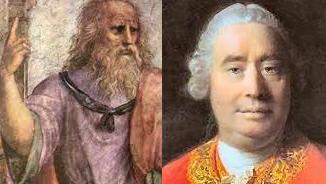
 Our beliefs, moral or otherwise, in order to be knowledge, must be ‘both’ justified (ought) by reasons ‘and’ true (is) to reality, satisfying both Plato and Hume. Read my latest post all about that here.
(3)
and
(4)
It is unclear here whether or not Dr. Craig thinks the is-ought fallacy is a real fallacy. He seems to when he dismisses the idea that “because God is a certain way we ought to behave in certain ways” (ibid). But he seems not to when he asserts “our moral obligations and prohibitions arise as a result of God’s commands to us” (ibid). It is a tangent, but he also unnecessarily distinguishes between moral obligations and moral values. Anyway, to say “because this is God’s command, we ought to behave according to it” commits the is-ought fallacy.
There has been some discourse with Dr. Craig on this matter via Facebook (5), and via email with Dr. Weikart. Dr. Weikart’s most recent reply just restates his misunderstanding:
(via email)
Grounded in, yes. Justified by, no.
Reference List
1. Ichthus77. (2011). Where I am at with Hume’s is-ought distinction. Retrieved from http://ichthus77.blogspot.com/2011/07/where-i-am-at-with-humes-is-ought.html
2. Ichthus77. (2011). Answering Gettier. Retrieved from http://ichthus77.blogspot.com/2011/01/answering-gettier.html
3. Reasonable Faith. (2012). Moral Argument for God. Retrieved from http://www.reasonablefaith.org/moral-argument-for-god#ixzz23vssuCM3
4. Reasonable Faith. (2012). Does Theistic Ethics Derive an “Ought” from an “Is”? Retrieved from http://www.reasonablefaith.org/does-theistic-ethics-derive-an-ought-from-an-is#ixzz23vtucp00
5. Ichthus77. (2012). Is-ought discussion with WLC. Retrieved from http://www.ichthus77.blogspot.com/2012/01/is-ought-discussion-with-wlc.html

There was an old soul
with an abysmal hole and
shadow puppet ends.
They were true for him
until he realized they lacked
real correspondence.
Rarely, if ever,
did he question whether he
hungered for nothing.

The apologetics study group LOVES this quote from Groothuis’ Christian Apologetics: “We may be entitled to our own opinions, but we are not entitled to our own facts.” p. 124 It’s actually a variant of a quote commonly attributed to Daniel Patrick Moynihan and a couple others, but that is not credited in the book. Still–it is true. I think it is fair to say it has achieved meme-status.
“‘Adultery is wrong’ is true because that statement corresponds to the objective, universal and absolute moral law revealed by God, which is in accordance with his eternally stable character and the character of his creation.” p. 126
That last quote hits on natural law, divine command, Euthyphro’s Dilemma, the is-ought fallacy, et cetera. I am currently discussing that with some folks from ILP here, and have done some work on it previously if you scroll to the relevant section here (“Euthyphro, Hume, Plato, Gettier”).
“The rise of science in the West is unique in world history. As Stark says,
Real science arose only once: in Europe. China, Islam, India, and ancient Greece and Rome each had a highly developed alchemy. But only in Europe did alchemy develop into chemistry. By the same token, many societies developed elaborate systems of astrology, but only in Europe did astrology lead to astronomy. Why?
“The answer lies in the Christian West’s view of God, creation and humanity. Unlike cultures elsewhere, ‘Christians developed science because they believed it could be done, and should be done.’ Philosopher and mathematician Alfred North Whitehead noted in Science and the Modern World that the medievalists insisted on ‘the rationality of God, conceived as with the personal energy of Jehovah and with the rationality of a Greek philosopher. Every detail was supervised and ordered: the search into nature could only result in the vindication of the faith in rationality.'” p. 101
“Slavery in Greco-Roman times was not as harsh and cruel as American slavery, although it certainly was no model for any society. References to slaves submitting to their masters in the New Testament are not endorsements of the institution but temporary injunctions given certain social realities. This is evident when Paul refers to slave traders as evil (1 Timothy 1:10) and when he bids slaves to seek freedom lawfully when they can (1 Corinthians 7:21). The book of Philemon did much to revolutionize the Christian view of slavery. Paul writes to Philemon that since Onesimus, his slave, is his rather in Christ, he should be treated well, ‘no longer as a slave, but better than a slave, as a dear brother. He is very dear to me but even dearer to you, both as a fellow man and as a brother in the Lord’ (Philemon 6). … (Jesus’) instruction that his followers not lord it over others but rather prize servanthood sets in motion an ethic ultimately incompatible with slavery (Mark 9:35).” p. 105
“Moreover, Jesus did not set up a male-dominated religious system in which women would be permanently subjugated. He surprised his followers by teaching theology to women in private and in public (Luke 10:38-42; John 4:7-27; 11:21-27) at a time when women were excluded from such affairs. Although he esteemed the family, Jesus stipulated that a woman’s principal purpose in life is not reducible to motherhood and domestic work, but is found in knowing and following God’s will (Luke 10:38-42; 11:27-28). Jesus also appeared to Mary after his resurrection and appointed her as a witness to this world-changing event–in a time when the witness of a woman was not respected (Matthew 28:5-10; John 20:17-18). His model of leadership was based on mutual service and sacrifice, not hierarchical authority structures:
Jesus called them together and said, ‘You know that the rulers of the Gentiles lord it over them, and their high officials exercise authority over them. Not so with you. Instead, whoever wants to become great among you must be your servant, and whoever wants to be first must be your slave–just as the Son of Man did not come to be served, but to serve, and to give his life as a ransom for many. (Matthew 20:25-28).
“In addition, in the early church, women served as prophets (Acts 2:17-18; 21:19) and teachers (Acts 18:24-26). Paul clearly articulated the spiritual and ontological equality of male and female believers when he said, ‘In Christ Jesus you are all children of God through faith, for all of you who were baptized into Christ have clothed yourselves with Christ. There is neither Jew nor Gentile, neither slave nor free, nor is there male and female, for you are all on in Christ Jesus’ (Galatians 3:26-28).” p. 107
“He never authorized imperialism, exploitation, coercion, threats or any other means of illicit power over others. Instead, he tells us to love our neighbors and even our enemies (Matthew 5:43-48). The book of Acts shows the early Christians winning conversions through persuasion, not coercion or manipulation. We find Christians, such as Stephen (the first Christian martyr), being persecuted and killed for their faith. This did not lead the Christians to an armed revolt but to fervent prayer, fasting and acts of faith in the face of opposition. Sadly, some later Christians who held the reins of political power did enforce Christian conformity through the sword. We would be hard pressed, though, to find any warrant for this in the teachings of Jesus or the apostles.” p. 111 Reminds me of Jesus putting the guy’s ear back on in Gethsemane.
“Further, the purpose of these wars was not the conversion of the inhabitants of the land but their military defeat. Therefore, there is no parallel to Christian witness today, which has nothing to do with conquering land by force. … The call for a holy (military) crusade made by the church is always out of sync with the Bible itself.” p. 112 I would add that the OT purpose was not mere defeat or conquering, but judgment. Revelation tells of judgment, but before that we will be raptured and won’t be around to help bring it about. Thank God he is patient.
“…humanity’s cultural achievements will be purified and brought into this resurrected world. ‘The wealth of the nations’ shall be brought into the eternal kingdom, thus giving its citizens ample occasion for enjoyment and appreciation. Beyond these historical monuments to God’s cultural grace are the manifold cultural creations that will flourish in a restored universe which is free of the Fall and filled with the manifest presence of God as the waters cover the sea (Isaiah 11:9, Revelation 21-22). … As Irenaeus wrote, ‘The glory of God is man fully alive’–and the redeemed will be fully alive in their glorified state.” pp. 115-116

…prayer? …reason?
My most recent Examiner.com news articles just in time for tomorrow’s National Day of Prayer:
In Modesto: Pray Modesto continues despite secular call to National Day of Reason May 2, 2012
In San Francisco: Congressman Pete Stark calls for National Day of Reason instead of prayer May 2, 2012
Have an opinion? Feel free to share it in the comments :)

Today my mother-in-law Jae and her new hubby Bobby took us to a Nuts game at John Thurman Stadium. We got together with some of their church friends and tail-gated pizza, hotdogs, grapes, chips and sodas in the Neece parking area before we went in. It was pretty cool watching the first pitches and participating in all the noise-making rituals.

Bobby bought the boys Nuts caps and I bought myself, the boys and Jae some icecream. There were some really exciting plays! We stuck around for a few innings. None of us care much for bleachers.
– Posted using BlogPress from my iPhone






Christian Apologetics Search Engine





 Ichthus77