[ work in progress ] [ completed 1/15/11 ]
Plato’s justified-true-belief definition of knowledge, maintained by critical realists, besides requiring that a belief be justified by evidence and true by correspondence, says 1) whether or not a belief is true has no bearing on whether or not it is justified, and 2) a belief is true or not regardless whatever justification we are (un)able to find for it. To violate 1 is to commit David Hume’s is-ought fallacy, and to violate 2 is to commit its reverse. The skeptic’s argument from error confirms that justification does not equate to truth (ought=/=is) when it notes that sometimes what we thought was justified turns out to have been false. Edmund Gettier’s problem examples also note this, but they also confirm that truth does not equate to justification (is=/=ought) when they show that sometimes we are right for the wrong reasons (and really the skeptic’s argument from error could also be saying this). Hume thought his is-ought fallacy leads to skepticism about knowledge (originally, moral knowledge), but this is prevented by following the requirement that a belief (i.e., an ethical theory) be justified by evidence and true by correspondence. However, Gettier’s point with his problem examples, in Christopher Norris’ words, “is that people can hold beliefs which are indeed justified and true, but which for various reasons intuitively strike us as not meeting the requirements for genuine knowledge,” (p. 140). Where Gettier goes wrong is when he allows wrong reasons to pass as justification—his whole basis for challenging the justified-true-belief definition of knowledge.
Some object, saying that Gettier did not go wrong in allowing wrong reasons to count as justification. But, if any old reason will do, then any old belief will do—it doesn’t need to be justified. But the criterion is “justified, true belief”. It is ‘not’ possible for a falsehood to justify a belief, but Gettier-style examples depend on it. Richard Feldman summarizes the requirements of stating a Gettier-style example: “First one has to find a case of a justified false belief. …One then identifies some truth that logically follows from that falsehood. …The example proceeds by having the believer deduce this truth from the justified false belief. …The resulting belief will be a justified true belief that is not knowledge,” (p. 28, Epistemology). However, being right for the wrong reasons means one’s belief is not justified. Some think this means hardly any beliefs are justified, but this claim is unjustified in light of leaps and bounds in scientific progress. To see how Gettier’s problem examples rely on wrong reasons for justification, one must actually examine the two problem examples, referred to as Case I and Case II, in the one short paper Gettier has published, titled “Is justified true belief knowledge?”
In Case I, Smith believes the true belief “The man who will get the job has ten coins in his pocket,” based on his (what turns out to be) false belief “Jones is the man who will get the job” and his true (but irrelevant) belief “Jones has ten coins in his pocket”. Since Smith gets hired instead and just so happens to have ten coins he had no idea were in his pocket, his belief “Jones is the man who will get the job,” is a false belief, and “Jones has ten coins in his pocket” is an irrelevant belief, both of which Gettier says justify the true belief “The man who will get the job has ten coins in his pocket,” challenging the justified-true-belief definition of knowledge. However, the challenge goes away when one stops allowing wrong or irrelevant reasons (like, “Jones is the man who will get the job” and “Jones has ten coins in his pocket,” respectively) to count as justification.
In Case II, Smith believes the true belief “Either Jones owns a Ford, or Brown is in Barcelona” but he believes it based on his false belief “Jones owns a Ford” (by the way, he also believes two false beliefs based on that false belief: “Either Jones owns a Ford, or Brown is in Boston,” and “Either Jones owns a Ford, or Brown is in Brest-Litovsk”—and he could have rightly named every place in the universe besides the place Brown is actually in, if he had been right that Jones owns a Ford). Smith believes “or Brown is in Barcelona” (which is true), but he does not believe Brown is in Barcelona (though s/he is), because he believes “Jones owns a Ford,” a false belief Gettier says justifies the (as it turns out) true belief “Either Jones owns a Ford, or Brown is in Barcelona,” challenging the justified-true-belief definition of knowledge. Again, the challenge goes away when one stops allowing wrong reasons (like “Jones owns a Ford”) to count as justification (“Brown is in Barcelona” cannot count as an irrelevant reason, because he does not believe it, and if he did, he would not say “Either Jones owns a Ford, or Brown is in Barcelona” because he believes “Jones owns a Ford” and hopefully is not in the habit of believing either/or at the same time he believes both/and is the case). It is interesting to note that the equivalent (almost) of “Brown is in Barcelona” in Case II, is “Jones has ten coins in his pocket” in Case I, except that in Case I, Smith believes it, and in Case II, Smith does not believe it. I’d be willing to bet Gettier was trying for more symmetry (perhaps he thought he achieved it, including “Brown is in Barcelona” with “Either Jones owns a Ford, or Brown is in Barcelona”), which, agreed (assuming I’m right), would have been beautiful.
Richard Feldman points out in “Epistemology” a couple principles referred to, though not by name, in Gettier’s paper: The Justified Falsehood Principle (“JF”) and the Justified Deduction Principle (“JD”). The JF states that “It is possible for a person to be justified in believing a false [belief].” In Case I, Smith was justified (assuming not by false grounds) in believing the false belief that Jones will get the job. In Case II, Smith was justified (assuming not by false grounds) in believing the false belief that Jones owns a Ford. However, though it is possible to believe a justified falsehood (JF), it is not possible for a falsehood to justify a belief (whether true or false), as the JD would have it. If a belief is based on any false grounds, it can only be justified if there are also true grounds which do the actual justifying [so this is not related to the No False Grounds (NFG) modified account of knowledge mentioned by Feldman and proposed by Michael Clark, who considered it necessary to add a fourth condition that a belief’s justification rely on no false grounds whatsoever]. Admitting that false grounds are false grounds is admitting they are non-justifiers. The mistake the JD makes is committing the is-ought fallacy. A belief’s being justified, does not make it true grounds! Beliefs are not justified by other justified beliefs; they are justified by true grounds (evidence). Feldman mentions that The Same Evidence Principle (SE) seems to show how weird it is to deny the JD and say Smith is justified in believing a false belief, but not justified in believing anything deduced from it. Feldman thinks the SE shows this is weird, since the false belief and the belief deduced from it both rely on the same evidence. However, any belief deduced from the false belief uses the evidence grounding the false belief, “plus” the false belief itself—so it isn’t exactly ‘just’ the same evidence.
Lehrer-Paxson’s No Defeaters (ND) Theory (a.k.a. defeasibility analysis), like Michael Clark’s No False Grounds Theory just mentioned, is an attempt to modify the justified-true-belief account of knowledge. “The idea is that one has knowledge when there are no truths that defeat one’s justification,” (p. 34, Feldman’s “Epistemology”). How is this different from the No False Grounds theory? It allows for a false ground, as long as disbelieving it (in response to a truth which defeats it), does not result in disbelieving the conclusion it grounds. This modification seems to avoid the Gettier problem because if Smith had stopped believing the truth-defeated beliefs that Jones would get the job (Case I) and owns a Ford (Case 2), he would stop believing “The man who will get the job has ten coins in his pocket,” (Case I) and “Either Jones owns a Ford, or Brown is in Barcelona” (and the other two similarly random beliefs in Case II). However, Feldman points out a couple problems with this modification. 1) To paraphrase an example, Smith knows his radio is off and he does not know what is playing on the radio. However, if Smith was justified in knowing that the radio is playing Neil Diamond’s “Girl, You’ll Be a Woman Soon” then (all other methods of learning ruled out) Smith’s radio would have to be on, which would defeat his knowing that it is off. 2) There can be false defeaters, like a true statement about a lie [“Tom’s mother said that Tom’s twin took the tape” (p. 35, Feldman’s “Epistemology”), when “Tom’s twin took the tape” is a lie], which make us think we were wrong, when actually we were right.
Feldman notes that even believing a true statement about a falsehood involves implicit dependence of the final conclusion upon a falsehood. He mentions the EDF modification which adds the requirement that a belief’s justification not ‘e’ssentially ‘d’epend on a ‘f’alsehood. Paul K. Moser, in the article “Gettier problem” in Dancy and Sosa’s “A Companion to Epistemology,” proposes a modification he calls evidential truth-sustenance (ETS), which basically says that as long as there are true beliefs (essentially) justifying a conclusion, the (non-essential) false beliefs do not make the conclusion less justified. But such a requirement is already housed within the ‘justified’ aspect of the justified-true-belief account of knowledge (which would also be true of NFG and ND, if they were accurate). Admitting that false grounds are false grounds is admitting they are non-justifiers, so that Gettier’s problem examples do not involve instances of justified, true belief, and so do not challenge Plato’s justified-true-belief account of knowledge.
*****
Sources:
Edmund Gettier’s paper, “Is justified true belief knowledge?” (1963)
http://www.ditext.com/gettier/gettier.html
Plato’s “Theaetetus” (360 B.C.E.)
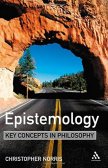
Christopher Norris’ “Epistemology” (2005)
Feldman’s “Epistemology” (2003)
David Hume’s “A Treatise of Human Nature” (1748)
Dancy&Sosa’s “A Companion to Epistemology” (2004)
–Paul K. Moser’s “Gettier problem” article therein









 Ichthus77